2026 Best Elisa Test Guide How to Choose the Right One?
The ELISA test remains a cornerstone in diagnostic and research laboratories. As of 2023, over 60% of labs utilize ELISA tests for various applications, according to a recent industry report. This method's versatility covers areas from infectious diseases to hormone level assessments. As the market evolves, choosing the right ELISA test becomes crucial for accurate results.
Many professionals often overlook critical factors when selecting an ELISA kit. The wrong choice can lead to false positives or negatives. Inconsistent quality across manufacturers adds to the confusion. Some kits may work well for one application but fail for another. A comprehensive understanding of specific needs is essential to navigate this landscape.
Improving test selection requires a careful analysis of available kits. Performance metrics, such as sensitivity and specificity, are vital. Not all ELISA tests are created equal. Researchers should not assume that higher costs equate to better quality. Hence, continuous review and comparison of options are necessary to achieve reliable outcomes.

Understanding ELISA Tests: An Overview of the Technique
Enzyme-linked immunosorbent assay (ELISA) is a vital technique in laboratories. It helps to detect proteins, hormones, and antibodies. The procedure is straightforward but requires precision. A plate’s wells are coated with a target antigen or antibody. Then, a sample is added to bond with it. This specificity enhances test reliability.
According to industry reports, the global ELISA market is projected to reach $4 billion by 2025. However, not all tests are created equal. The choice of reagents and equipment significantly impacts results. It’s essential to ensure that the test has been validated for specificity and sensitivity. A poorly validated test can yield false positives or negatives, leading to costly errors.
Understanding the test's workflow is crucial. Sample preparation, incubation times, and washing steps are pivotal. Each affects the assay's accuracy. Sometimes, people overlook the importance of standard controls. These controls can help identify inconsistencies caused by environmental factors. Therefore, continual evaluation of the ELISA process is necessary to maintain its integrity.
Types of ELISA Tests: Which One Suits Your Needs?
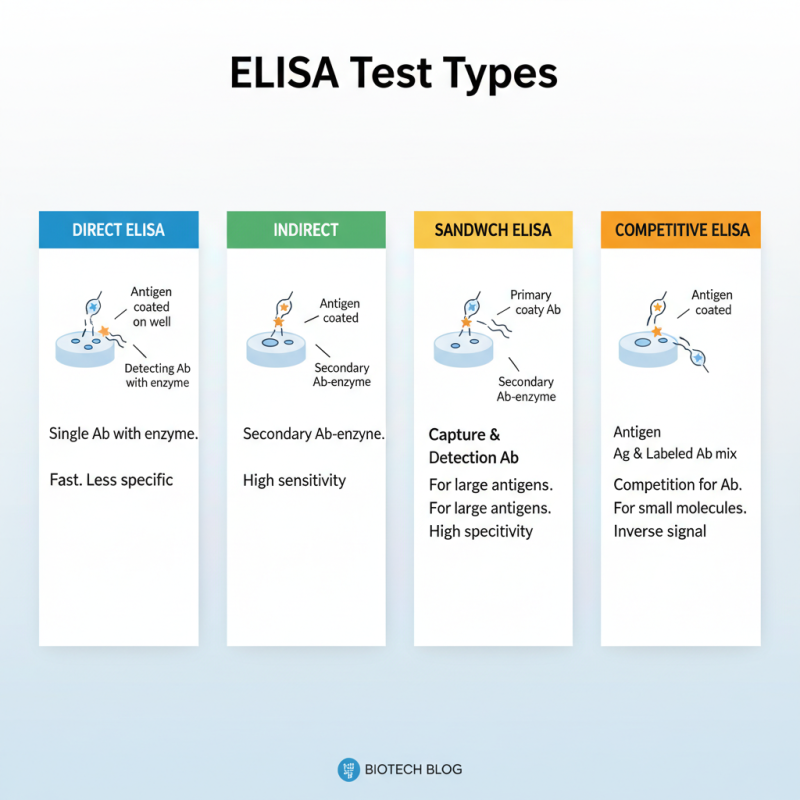
When selecting an ELISA test, consider the different types available. The most common are direct, indirect, sandwich, and competitive ELISA. Each type serves unique purposes.
Direct ELISA is straightforward. It detects antigens in a sample using a single antibody. This method is quick but may lack sensitivity. Indirect ELISA offers higher sensitivity by using two antibodies. It's ideal for detecting antibodies against specific antigens. Sandwich ELISA is another popular choice; it uses two antibodies to capture and detect the target molecule. This method is precise and often preferred in research.
**Tip**: Assess your specific needs before choosing a test. Think about what you want to measure. Consider the sample type, sensitivity, and turnaround time for results.
Competitive ELISA is less common, yet valuable for certain applications. It measures decreases in signal from a sample competing with a label for binding sites. This can be tricky. Misinterpretation of results may occur if you’re unfamiliar with its application.
**Tip**: Don’t rush into a decision. Explore the advantages and limitations of each ELISA type. Take time to reflect on your requirements and priorities. Your careful consideration will lead to better outcomes.
Key Factors to Consider When Choosing an ELISA Test
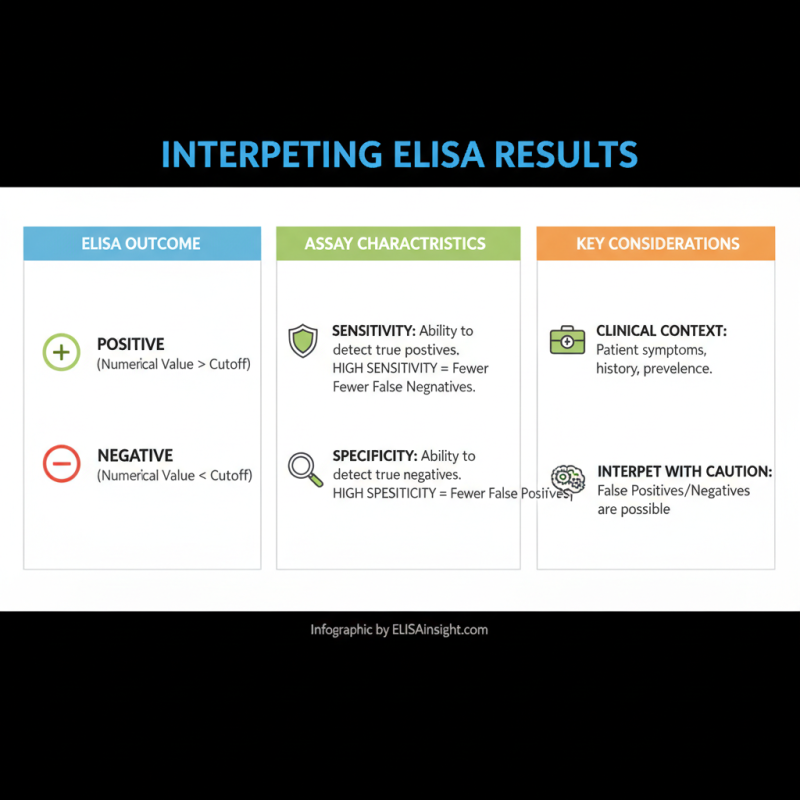
Choosing the right ELISA test is critical for accurate results. Key factors to consider include sensitivity, specificity, and sample type. Sensitivity measures the assay's ability to detect low concentrations of an analyte. In many studies, ELISAs exhibit sensitivity rates of over 90%, but this can vary based on the method used.
Specificity is also crucial. It indicates how well the test distinguishes the target analyte from other substances. Some ELISA tests boast specificities exceeding 95%. However, this number can decrease if cross-reactivity with similar molecules occurs. Evaluating this aspect can save time and resources in research or clinical settings.
Additionally, consider the sample type required for testing. Common samples include serum, plasma, or tissue homogenates. An ideal ELISA test should accommodate various sample types without compromising accuracy. Data shows that wealthier labs often prefer serological tests due to convenience and higher yield. But smaller labs may need to reflect carefully on available technology and budget. In such cases, balancing quality and affordability is essential.
Assessing Quality: How to Evaluate ELISA Test Kits
When selecting an ELISA test kit, assessing quality is crucial. Start by reviewing the technical specifications. Look for details on sensitivity and specificity. These metrics indicate how reliable the kit is in detecting analytes. Kits with higher values are generally better options. But don't forget to examine the price point. Expensive kits aren't always the most accurate.
Check for user reviews and feedback. Real-world experiences provide insights into kit performance. Sometimes, a kit may have great specs but poor user experiences. This disparity can lead to unforeseen issues in your testing. Additionally, consider the availability of support from the manufacturer. Having accessible technical support can salvage a challenging experiment.
Finally, ensure the kit is suitable for your specific application. Some kits are tailored for research, while others are for clinical use. Mismatches can lead to flawed results. It's not enough to pick a popular brand. Take time to reflect on your needs. Choosing wisely will enhance your research efficiency.
2026 Best ELISA Test Kits Evaluation