What Are the 2026 Best PCR Reagents for Global Buyers?
Choosing the best PCR reagents in 2026 requires more than comparing prices, enzyme brands, or marketing claims. Global buyers need dependable performance across laboratories, climates, instruments, and supply chains. A reagent that performs well in a controlled European laboratory may behave differently after extended transport, temperature fluctuations, or repeated freeze-thaw cycles. That reality deserves attention.
Nobel Prize-winning PCR pioneer Kary Mullis once said, “With PCR, I can make a billion copies of a molecule in a few hours.” His words capture PCR’s extraordinary amplification power, but amplification alone does not guarantee reliable results. Modern buyers should examine hot-start control, polymerase fidelity, inhibitor tolerance, low-copy sensitivity, fluorescence consistency, and compatibility with different master mixes. Lot-to-lot stability matters. So does clear technical documentation.
This guide evaluates pcr reagents through a practical global purchasing lens. It considers real laboratory pressures, including limited cold-chain access, changing assay volumes, and inconsistent sample quality. Lyophilized formats may reduce shipping risks, while validated liquid reagents can simplify established workflows. Neither option is automatically superior. The right choice depends on assay design, storage capacity, instrument compatibility, and intended use.
Some comparisons remain imperfect. Public performance data may not use identical samples or cycling conditions. Buyers should therefore request certificates of analysis, stability data, validation reports, and independent technical support before committing. A lower unit price can become expensive after failed runs, delayed reporting, or repeated optimization. The strongest 2026 pcr reagents will combine analytical performance with practical reliability, transparent evidence, and responsive supply support. "Best" is not universal. It is measurable in context.
PCR Reagent Types and Their Roles in Molecular Testing
What Are the 2026 Best PCR Reagents for Global Buyers?
PCR reagents support each stage of molecular testing. A DNA polymerase builds new strands from a template. Its speed, fidelity, and inhibitor tolerance affect amplification quality. Reverse transcriptase converts RNA into complementary DNA for RT-PCR workflows. This step needs careful temperature control and consistent enzyme performance.
Primers define the target region. Probes add sequence-specific detection in quantitative PCR. Free nucleotides provide the building blocks for new DNA. Magnesium ions activate polymerase, but excessive magnesium may increase nonspecific products. Reaction buffers maintain the chemical conditions needed for stable amplification. Many laboratories choose ready-to-use master mixes to reduce pipetting errors and improve daily consistency.
Controls make results more trustworthy. A positive control confirms that the reaction can work. A negative control helps reveal contamination. Internal controls can identify extraction failure or sample inhibition. In practice, global buyers should compare lot-to-lot consistency, storage requirements, shelf life, technical documents, and shipping stability. Cold-chain handling still matters.
No reagent is universally best. A fast mix may not suit difficult samples. A cheaper product can create hidden costs through repeat testing. We have seen small changes in sample preparation alter Ct values more than expected. That finding deserves caution. Buyers should validate reagents with representative specimens, not only clean laboratory standards. Clear instructions, traceable quality records, and responsive technical support also influence reliable molecular testing.
What Are the 2026 Best PCR Reagents for Global Buyers?
PCR Reagent Types and Their Roles in Molecular Testing
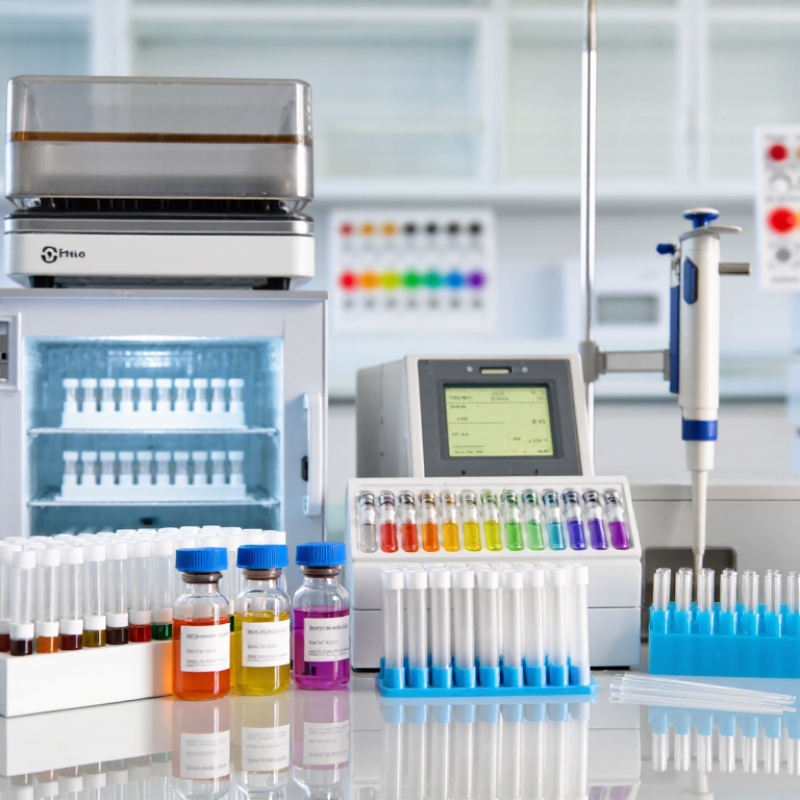
This chart maps the core functions of common PCR reagents across the three main thermal-cycling stages. Template DNA and reaction buffer support the overall amplification environment, primers define the target region and initiate synthesis, while DNA polymerase, dNTPs, and magnesium ions directly support strand extension. Global buyers should match reagent format and performance to the application, including endpoint PCR, RT-PCR, qPCR, hot-start workflows, and high-fidelity amplification.
Key Performance Criteria for Comparing PCR Reagents in 2026
For global buyers, the best PCR reagent is not simply the fastest option. It must deliver stable results across instruments, operators, and sample types. Grand View Research valued the global PCR market at about USD 10.8 billion in 2023. It also projected a 7.3% compound annual growth rate through 2030. This expansion makes technical comparison more important, not less.
Sensitivity, specificity, and amplification efficiency should lead the evaluation. The MIQE framework recommends approximately 90–110% efficiency and strong calibration-line performance. Buyers should request limit-of-detection data, inhibition studies, and repeatability results. A small Ct shift can change interpretation near a reporting threshold. Check raw curves, not only supplier summaries. That detail matters.
Reagent stability is equally practical. Review real-time stability, freeze-thaw tolerance, lot-to-lot variation, and transport conditions. ISO 15189:2022 stresses validated processes, traceability, and documented competence in medical laboratories. Packaging should protect reagents during long customs delays and temperature changes. One overlooked weakness is sample compatibility. Blood, saliva, tissue extracts, and environmental samples can inhibit reactions differently. I would not trust a single clean control result. Independent verification across local sample matrices is safer. Still, even this approach has limits when reference materials are scarce or poorly characterized.
How to Match PCR Reagents with Different Testing Applications
For global buyers, the best PCR reagent in 2026 is not automatically the fastest or cheapest. It must match the testing application, sample type, and laboratory workflow. The WHO Global Tuberculosis Report 2024 estimated 10.8 million tuberculosis cases in 2023, showing the continuing need for sensitive molecular testing. For low-copy targets, select chemistry with strong limit-of-detection data, stable fluorescence, and a verified internal control. Blood and plasma testing also requires compatibility with extraction residues.
Different samples create different problems. Respiratory swabs may benefit from fast hot-start reagents and multiplex stability. Stool, soil, and food samples often contain inhibitors, so inhibitor-tolerance data matters more than headline speed. For RNA targets, reverse-transcription performance should be assessed separately from amplification efficiency. Small details matter. Check the required input volume, cycling time, freeze-thaw tolerance, and storage temperature before purchase.
A useful comparison uses real specimens, not only purified templates. The WHO Global Malaria Programme continues to emphasize reliable laboratory confirmation, yet field laboratories may face heat, transport delays, and limited cold-chain capacity. Therefore, buyers should review stability studies, lot-to-lot consistency, quality controls, and regulatory documentation. ISO 13485 certification can support quality assurance, but it does not prove application fit. I would not call any reagent universally best. A reagent may perform well in a clean control and fail with an actual patient sample. That gap deserves honest validation.
Global Sourcing, Regulatory, and Compatibility Considerations
What Are the 2026 Best PCR Reagents for Global Buyers?
The best PCR reagents in 2026 will depend on application, destination, and instrument compatibility. A fast polymerase is not automatically the best choice for every laboratory. Buyers should compare amplification speed, inhibitor tolerance, detection chemistry, shelf life, and lot consistency. Small details matter. A reagent that works well with clean DNA may perform poorly with crude clinical or environmental extracts.
Global sourcing requires more than a competitive price. Ask suppliers for a clear certificate of analysis, safety data sheet, lot number, expiry date, and recommended storage range. Confirm whether the product is research-use-only or approved for a regulated diagnostic workflow. Import documents, labeling, customs requirements, and local registration rules can differ sharply between countries. Cold-chain records are also important, especially when shipments cross several climate zones.
Compatibility checks should happen before purchase orders. Test the master mix with the laboratory’s exact cycler, optical channels, plastics, and sample matrix. Review recommended primer and probe concentrations, reaction volume, and freeze-thaw limits. A spreadsheet may still miss a critical detail. I have seen teams compare unit prices while overlooking shipping temperature or minimum order quantities. That approach looks efficient, but it can create expensive delays. No checklist is perfect. Keep a small validation batch before committing to larger global shipments.