China Top 10 Recombinant Protein Manufacturers?

China’s recombinant protein industry has grown from small laboratory services into a diverse manufacturing ecosystem. Today, suppliers support research, diagnostics, bioprocess development, and regulated pharmaceutical programs. Their capabilities may include E. coli expression, mammalian cell culture, yeast systems, purification, formulation, and analytical testing. These differences matter when selecting a reliable partner.

This guide introduces ten notable Chinese manufacturers associated with recombinant protein production. It considers technical experience, production capacity, quality systems, customization, documentation, and international service. A strong supplier should provide clear certificates of analysis, batch records, stability information, and transparent specifications. Practical details also deserve attention, such as endotoxin limits, aggregation results, shipping temperature, and lead time. Small details can affect an entire experiment.

The ranking is not absolute. Public information can be incomplete, and company strengths may change with new facilities, technologies, or certifications. A supplier experienced in research-grade cytokines may not suit a clinical manufacturing project. Conversely, a large organization may offer capacity but less flexibility for unusual constructs. That distinction is easy to overlook.

Readers should verify current certifications, technical data, and service terms directly with each manufacturer. Independent testing may also be appropriate before a major purchase. This approach supports informed decisions while recognizing that no list can replace technical due diligence. Quality is measurable, but fit is project-specific.
China Top 10 Recombinant Protein Manufacturers?

What Are Recombinant Proteins and Why Are They Important?

Recombinant proteins are lab-produced proteins made by placing a selected gene into living host cells, such as bacteria, yeast, or mammalian cells. These cells act like small factories. They produce the target protein, which is later purified and tested. The process can deliver proteins with consistent identity, structure, and activity, although results depend heavily on the expression system.

These proteins support many areas of modern science. Researchers use them to study cell signaling, enzyme activity, immune responses, and disease mechanisms. Diagnostic developers may use them as assay components. Carefully characterized proteins also support therapeutic research and quality-control testing. Small differences matter. Purity, folding, aggregation, endotoxin levels, and biological activity can affect experimental results.

When reviewing China’s top recombinant protein manufacturers, buyers should examine more than product catalogs. Reliable evaluation includes production capacity, analytical methods, batch records, traceability, and storage conditions. Clear certificates and stability data are valuable evidence. Technical support also matters when a protein performs poorly in a new assay. A ranking can mislead if it relies only on sales volume or online visibility. In practice, the best supplier depends on the protein’s intended use, required scale, and validation standard. Some published specifications may look complete but still leave important questions unanswered. That is worth checking before procurement.

How to Evaluate Recombinant Protein Manufacturers in China

China Top 10 Recombinant Protein Manufacturers?

Evaluating Chinese recombinant protein manufacturers requires more than reviewing a product catalog. Start with technical fit, not price. Confirm expression systems, host strains, purification methods, endotoxin limits, and storage conditions. China’s National Bureau of Statistics reported that national R&D spending reached 2.64% of GDP in 2023. This signals deeper scientific capacity, but investment alone does not guarantee consistent protein quality. IQVIA’s Global Trends in R&D 2024 counted 6,147 medicines in clinical development worldwide in 2023. That growing pipeline increases demand for reliable research-grade and clinical materials.

Request a complete quality package before testing samples. It should include a certificate of analysis, sequence confirmation, purity data, activity assays, and batch-to-batch results. For regulated projects, review the manufacturer’s alignment with ICH Q6B and ICH Q5E principles. Check whether testing uses validated methods or internal procedures only. Visit the facility when possible. Observe cold-chain monitoring, deviation records, and change-control practices. A low quotation can hide weak documentation. My own checklist still misses issues when communication is rushed.

Tips: Compare three lots, not one. Ask for raw chromatograms and assay controls. Verify lead times using a small pilot order. Review the 2024 BioPlan Associates Annual Report for broader biomanufacturing trends. Then score technical evidence, regulatory readiness, service response, and supply continuity separately. No scorecard is perfect. Recheck critical assumptions before signing a long-term agreement.

China’s Leading Recombinant Protein Manufacturers

China’s leading recombinant protein manufacturers are judged by more than production scale. Strong suppliers combine experienced scientists, controlled facilities, and clear communication throughout development. Their teams may support microbial, yeast, or mammalian expression systems, depending on protein complexity and intended use.

Practical evaluation starts with the laboratory floor. Ask how technicians manage cell banks, purification steps, and temperature-sensitive samples. Inspect records for batch consistency, sterility controls, endotoxin testing, purity, identity, and biological activity. Methods such as SDS-PAGE, SEC-HPLC, mass spectrometry, and functional assays can provide useful evidence. Reliable manufacturers also explain deviations instead of hiding them.

Regulatory readiness matters. Facilities should follow appropriate quality systems and maintain traceable documentation from raw materials to final shipment. Experienced partners usually provide technical transfer support, stability data, and realistic timelines. Very cheap quotations deserve careful questions. They may exclude method development or repeat testing. No supplier is perfect. Even a capable manufacturer can face expression failure, aggregation, or delayed validation. The better ones disclose these risks early and propose measurable corrective actions. Site audits, reference checks, and small pilot batches can reveal more than polished presentations. China's manufacturing landscape is broad, so buyers should compare evidence, not slogans.

China’s Leading Recombinant Protein Manufacturers

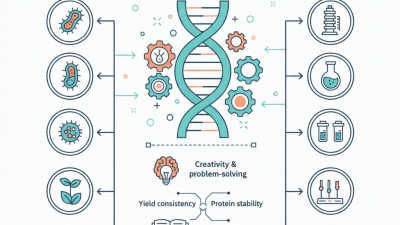
The chart compares the main capabilities commonly used to evaluate recombinant protein manufacturers in China. The scoring model uses a 100-point benchmark based on production scalability, GMP readiness, expression-system coverage, quality control, customization, regulatory support, and international supply capability. It is intended as an industry comparison framework rather than a ranking of individual companies.

Product Categories and Manufacturing Technologies

China’s top 10 recombinant protein manufacturers should be assessed by product categories and manufacturing technologies, not ranking claims alone. MarketsandMarkets estimated the global recombinant proteins market at about USD 11.2 billion in 2023. It projects the market to reach USD 17.3 billion by 2028, with a 9.1% CAGR.

Product categories usually include cytokines, growth factors, enzymes, antibodies, vaccine-related antigens, and research-grade proteins. Escherichia coli supports fast, economical production of simpler proteins. Yeast can improve secretion and scalability. Mammalian cell systems, especially CHO platforms, remain important for complex proteins requiring human-like glycosylation. Insect cells offer a useful middle ground. Cell-free expression is promising, but cost and scale still limit wider adoption. That limitation matters.

Manufacturing quality depends on more than expression yield. Strong facilities combine upstream process control, single-use bioreactors, chromatography, ultrafiltration, sterile filtration, and validated cold-chain handling. BioPlan Associates’ 2024 biopharmaceutical manufacturing survey highlights continued industry interest in single-use systems and process intensification. Yet, technology descriptions can sound better than real performance. Buyers should review batch consistency, host-cell protein clearance, endotoxin levels, stability data, and change-control records.

Tips: Ask for a technology-specific comparison. Check whether reported yields reflect laboratory, pilot, or commercial scale. Review independent testing and recent audit evidence. A low price may hide weaker recovery rates or shorter shelf life. In practice, the most suitable manufacturer is rarely the one with the largest catalog.

Quality Standards, Applications, and Selection Criteria

China’s top 10 recombinant protein manufacturers should be assessed by evidence, not rankings alone. Grand View Research valued the global recombinant protein market at about USD 1.9 billion in 2023. It also projects strong growth through 2030. This demand covers research reagents, diagnostics, vaccines, and therapeutic development.

Quality begins with documented GMP controls and traceable production records. WHO Technical Report Series guidance emphasizes validated processes, contamination control, and consistent testing. Ask for purity, endotoxin, host-cell protein, residual DNA, aggregation, and biological activity results. Lot-to-lot data matters. A clean specification sheet is not enough. Stability studies should reflect real storage conditions, including refrigerated transport and repeated handling. ISO 9001 supports quality management, while ISO 13485 is more relevant for medical-device-related applications. For regulated development, alignment with local pharmacopoeial standards is essential.

Tips: Request a recent certificate of analysis, sample-testing data, and change-control history. Compare expression systems, tag design, buffer composition, and lead time. BioPlan Associates’ 2024 biomanufacturing survey highlights continuing attention to supply reliability, process flexibility, and single-use production. A low price can hide weaker characterization. No checklist is perfect. Independent verification remains valuable, especially for sensitive assays or clinical research materials.

China Top 10 Recombinant Protein Manufacturers? - Quality Standards, Applications, and Selection Criteria

Benchmark scope: This table presents ten anonymized manufacturer profiles and industry-standard evaluation criteria. It is intended for supplier screening and does not constitute a verified ranking of named companies.

Important: Certification status, product specifications, regulatory documentation, and manufacturing capacity should be confirmed directly with each prospective supplier before purchase or qualification.

Profile Typical Manufacturing Focus Common Expression Systems Representative Applications Quality Standards to Verify Core QC Tests Typical Scale Key Selection Considerations
01 Research-grade cytokines and growth factors Escherichia coli; mammalian cells for complex proteins Cell culture, immunology, stem-cell research, assay development ISO 9001:2015; documented lot traceability; validated analytical methods SDS-PAGE, SEC-HPLC, endotoxin, sterility or bioburden, activity assay Milligram to gram Biological activity, purity, endotoxin limit, formulation stability
02 Diagnostic antigens and recombinant antibodies E. coli, yeast, mammalian cells, or cell-free systems ELISA, lateral-flow tests, immunoassays, research reagents ISO 9001; ISO 13485 where applicable; design and change-control records Identity, purity, binding activity, cross-reactivity, residual host-cell proteins Gram to kilogram Batch consistency, epitope preservation, matrix compatibility, supply continuity
03 Enzymes for research and industrial biocatalysis E. coli, Bacillus, yeast, or filamentous fungi Molecular biology, food processing, biosynthesis, analytical chemistry ISO 9001; HACCP or food-grade controls when relevant; process validation records Specific activity, pH and temperature profile, purity, residual DNA, stability Gram to metric-ton scale Activity definition, operating range, enzyme lifetime, cost per reaction or unit
04 Vaccine and bioprocessing antigens Mammalian, insect, yeast, or bacterial systems Preclinical vaccine studies, assay development, process research GMP or GMP-like controls where required; ICH Q7 principles; deviation and CAPA systems Identity, aggregate level, glycosylation where relevant, bioburden, endotoxin, potency Gram to multi-kilogram Regulatory documentation, antigen conformation, scale-up history, cold-chain capability
05 Fc-fusion proteins and therapeutic research candidates Transient or stable mammalian expression Pharmacology, receptor studies, preclinical development, assay standards ISO 9001; GMP manufacturing availability; controlled master and working cell banks SEC-HPLC, CE-SDS, glycan profile, binding potency, endotoxin, osmolality Milligram to kilogram Correct folding, Fc functionality, aggregate control, comparability after scale-up
06 Membrane proteins and difficult-to-express targets Mammalian, insect, yeast, or cell-free expression Structural biology, drug discovery, screening, antibody generation ISO 9001; documented construct screening; controlled purification and storage procedures Monodispersity, thermal stability, ligand binding, purity, reconstitution performance Milligram to gram Detergent or lipid compatibility, conformational integrity, custom construct support
07 Custom recombinant protein development E. coli, yeast, insect, mammalian, and cell-free platforms Gene-to-protein projects, feasibility studies, difficult target optimization ISO 9001; project-specific quality agreements; documented change management Sequence confirmation, identity, purity, activity, endotoxin, residual impurities Milligram to multi-kilogram Technical communication, milestone control, intellectual-property protection, timeline
08 Albumin, carrier proteins, and stabilizing proteins Yeast, E. coli, or mammalian cells depending on product design Drug delivery research, formulation, cell culture, diagnostic reagents ISO 9001; GMP documentation for regulated use; raw-material qualification Purity, fatty-acid or ligand content where relevant, endotoxin, viral safety assessment Gram to metric-ton scale Low impurity burden, formulation compatibility, stability data, supply volume
09 Proteins for cell and gene therapy process development Mammalian, microbial, or engineered host systems Cell expansion, transfection, viral-vector production, media supplementation GMP readiness; aseptic processing controls; audit trail; data integrity practices Potency, sterility or bioburden, endotoxin, mycoplasma where applicable, aggregates Gram to multi-kilogram Regulatory grade, lot-to-lot performance, aseptic fill options, audit support
10 Large-scale bulk recombinant proteins Microbial, yeast, or mammalian production platforms Industrial formulations, media components, diagnostics, biomanufacturing ISO 9001; GMP or food-grade systems according to intended use; supplier qualification program Identity, purity, activity, microbial limits, endotoxin, residual DNA and host-cell proteins Kilogram to metric-ton scale Total cost of ownership, production redundancy, delivery reliability, packaging and storage
Recommended supplier-selection sequence: Confirm intended use and regulatory grade; request a certificate of analysis and sample lot; review identity, purity, activity, endotoxin, sterility or bioburden data; assess manufacturing controls and change notification procedures; then compare price, lead time, minimum order quantity, technical support, and continuity of supply.