How to Choose the Best Sanger Sequencing Reagents for Your Needs?
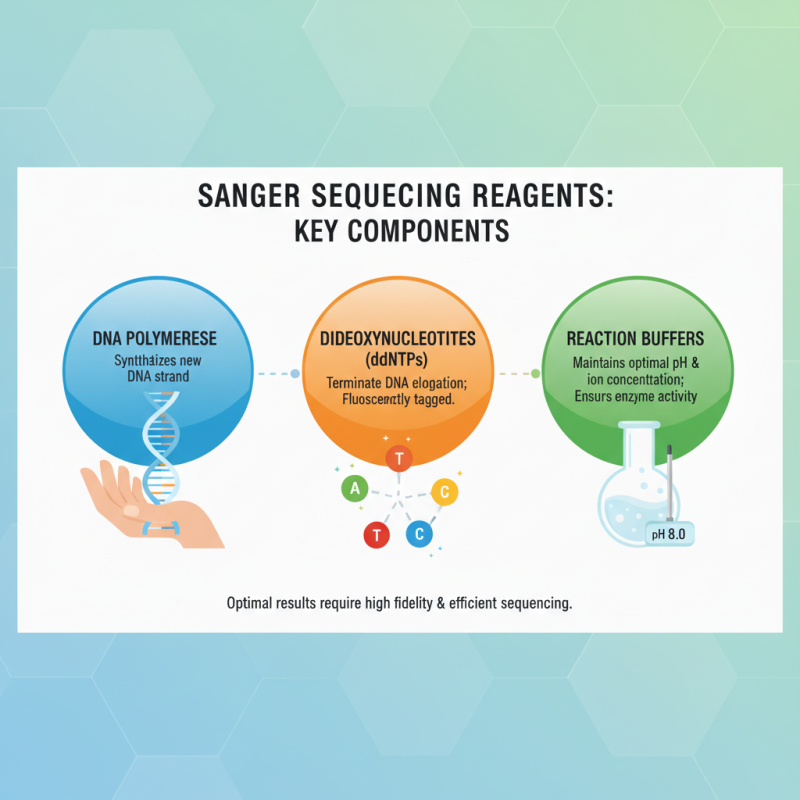
Sanger sequencing is one of the most reliable methods in genetic analysis. Selecting the best Sanger sequencing reagents is crucial for obtaining high-quality data. According to a report from the National Human Genome Research Institute, the accuracy of DNA sequencing significantly relies on reagent quality. Poor-quality reagents can lead to erroneous results and wasted resources.
In recent years, the global Sanger sequencing market has expanded, with a projected growth rate of 8.9% from 2023 to 2030. This highlights the increasing demand for efficient and accurate sequencing. Many researchers struggle with reagent selection due to the variety of options available. Factors such as read length, error rates, and overall performance must be considered.
Choosing the right Sanger sequencing reagents is not merely a procedural step; it is a decision that impacts research outcomes. Some reagents may perform well in certain contexts yet fail under different conditions. Researchers must weigh their project needs against the reliability of these products. Balancing quality and cost remains an ongoing challenge in the industry.

Identifying Your Specific Sequencing Requirements
Choosing the right Sanger sequencing reagents starts with identifying your specific sequencing requirements. Every project has unique needs based on the DNA quality, the scale of sequencing, and the desired accuracy. For instance, a study published in Nature Biotechnology in 2022 highlighted that around 75% of sequencing failures stem from poor sample preparation. This data underscores the importance of selecting reagents that are compatible with your sample type.
When evaluating reagents, consider the sequence length and accuracy required for your research. Research in the field indicates that for high-throughput projects, the accuracy threshold should be above 99.99%. This can often be achieved with high-quality polymerases and dideoxynucleotide triphosphates (ddNTPs). Equally important is stability; reagents must maintain their function under storage conditions. A report by the Journal of Molecular Biology indicated that reagents degrade faster in humid environments, leading to unreliable results.
Another factor is cost-effectiveness. Balancing price and quality is crucial. Projects requiring minimal sequences can often utilize less expensive reagents. However, cutting costs on essential components can compromise results. Understanding the trade-offs in reagent selection is vital to achieving optimal sequencing outcomes, ensuring researchers invest wisely in their projects.
Evaluating Reagent Quality and Performance Metrics
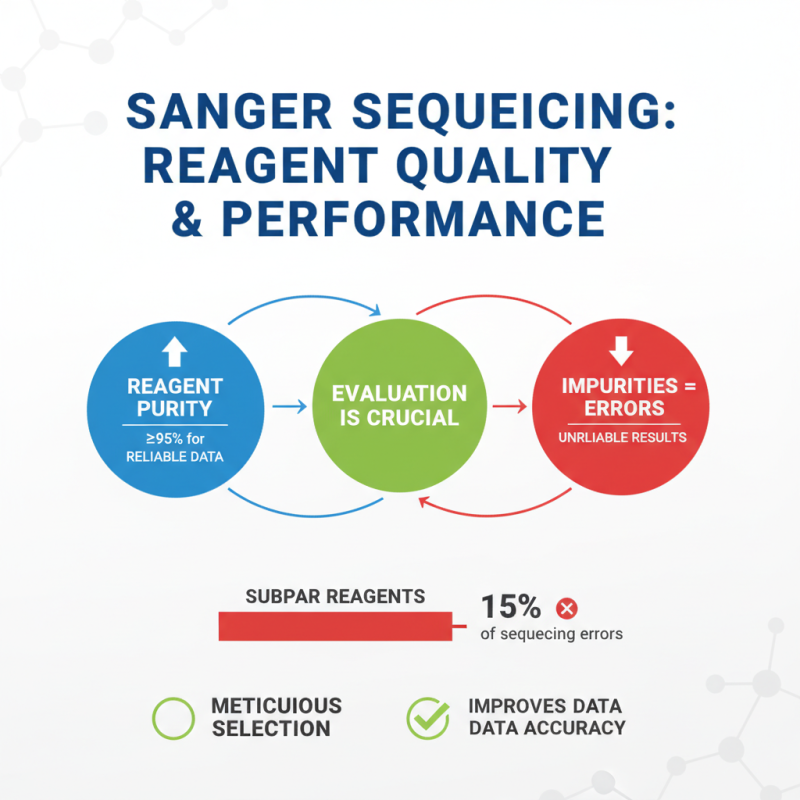
When selecting Sanger sequencing reagents, evaluating their quality and performance metrics is crucial. Reagent purity can significantly impact sequencing results. High-quality reagents often have a purity level of 95% or better. Impurities can introduce errors, leading to unreliable data. According to a study published in the "Journal of Molecular Biology," approximately 15% of sequencing errors may be attributed to subpar reagents. This statistic underlines the importance of meticulous reagent selection.
Performance metrics such as reaction efficiency and read length require attention. Reaction efficiency directly correlates with data quality. Ideally, a good reagent should yield over 80% efficiency. Also, consider the read length capability of the reagents. Longer read lengths lead to more comprehensive data, which is essential for complex genomes. Some reports suggest that reagents with optimal enzyme activity can extend reads by an average of 30%. However, achieving these benchmarks is not always straightforward. Variability in sample conditions can lead to inconsistent performances, necessitating careful calibration and control checks.
Awareness of these details helps researchers make informed choices. Advanced metrics can provide deeper insights into reagent performance. Continuous evaluation and adjustment can further enhance results, reflecting the iterative nature of scientific work.
Considering Cost and Supplier Reliability
Choosing the right Sanger sequencing reagents involves careful consideration of supplier reliability and cost. A reliable supplier should have a proven track record in delivering high-quality reagents consistently. Look for suppliers with transparency in their production processes. This can often be reflected in customer reviews and industry accolades.
Cost is another critical factor. While it’s tempting to opt for the cheapest options available, this could compromise the quality of your sequencing results. Balancing cost and reliability can be tricky. Sometimes, spending a little more means better accuracy and fewer errors in your sequencing data. Evaluate each supplier's warranty and support services.
Inconsistencies in reagent performance can lead to frustrations. Check for documentation regarding each batch of reagents. This helps in ensuring that you receive reliable products. It’s important to ask for feedback or seek testimonials from peers in your field. Engage in open discussions with colleagues about their experiences. These conversations can provide insights that help you make informed decisions.
Analysis of Sanger Sequencing Reagent Costs and Reliability
This chart illustrates the cost and reliability of different Sanger sequencing reagents. The cost is measured in USD, while reliability is rated on a scale of 1 to 5, with 5 being the highest reliability. This provides insight into making an informed decision based on budget and quality.
Reviewing User Experiences and Case Studies in Reagent Selection
Choosing the right Sanger sequencing reagents is crucial. User experiences shed light on factors that influence selection. One researcher noted that their initial choice of reagents led to unexpected results. Adjusting the concentrations helped improve the accuracy of their outcomes. This illustrates the importance of understanding specific needs.
Case studies reveal varying preferences among researchers. Some prioritize cost-effectiveness, while others value quality above all. A biologist shared that switching reagents increased their throughput significantly. This shift not only saved time but also enhanced their confidence in results. It’s clear that personal experience plays a vital role in reagent selection.
Listening to the diverse experiences of other users can guide your decision. Testing different formulations allows researchers to fine-tune their workflows. The learning process is ongoing, and sometimes frustrating. However, these challenges often lead to better practices in the long run. Growing expertise is a journey marked by trial and error, ultimately refining your sequencing results.
How to Choose the Best Sanger Sequencing Reagents for Your Needs?
| Reagent Type |
User Rating |
Application |
Cost per Reaction |
Preferred Features |
| DNA Polymerase |
4.5/5 |
High-throughput Sequencing |
$2.50 |
High fidelity, fast amplification |
| dNTP Mixture |
4.3/5 |
Basic Sequencing |
$1.00 |
Stable at room temperature |
| Sequencing Buffer |
4.7/5 |
Cloning Applications |
$0.50 |
Optimized pH levels, easy to prepare |
| Primer Mix |
4.8/5 |
Targeted Sequencing |
$3.00 |
Customizable length and concentration |
| Termination Mix |
4.6/5 |
Long Reads Sequencing |
$2.75 |
Reduced background noise, high yield |