How to Choose the Best Protein Purification System?
Choosing the right protein purification system can determine whether a promising experiment succeeds or stalls.
In a working laboratory, the decision involves more than comparing product specifications. Sample volume, protein stability, purity targets, throughput, and available expertise all matter. A small research group may need a flexible chromatography platform, while a bioprocessing facility may require automation, reproducibility, and documented process control. The best system should match the protein, not simply the laboratory budget.
Practical experience often reveals details that brochures overlook. A compact instrument may save bench space but limit future scale-up. A high-capacity column may improve productivity but waste valuable sample during method development. Some proteins lose activity during long purification steps. Others bind unpredictably, even under carefully planned conditions. These problems are frustrating. They are also useful warnings.
This guide examines the major factors behind effective protein purification system selection. It considers chromatography methods, buffer compatibility, detection options, maintenance requirements, software usability, and support services. Recommendations should be based on validated performance data, manufacturer documentation, and results from comparable samples. Independent technical reviews can help, but they should not replace controlled testing.
There is no universally perfect platform. A reliable choice may still involve compromises. The goal is to identify a system that delivers consistent purity, protects protein function, and supports realistic laboratory workflows. That requires careful questioning before purchase, including what the laboratory needs today and what it may need next year.
Define the Protein Purification Goal and Sample Requirements
A reliable protein purification system begins with a clear goal. Do you need an active enzyme, a structural sample, or a material for antibody testing? Each purpose demands different purity, concentration, and handling conditions. A sample for structural analysis may require exceptional homogeneity. An activity assay may tolerate minor impurities but require native protein. Define the acceptable result before comparing equipment.
In routine laboratory work, I check the starting material carefully. Is it a cell lysate, tissue extract, culture fluid, or a partially purified fraction? Note its volume, viscosity, salt level, and target concentration. These details affect filtration, binding capacity, and processing time. Sensitive proteins may lose activity during long procedures. Others aggregate when concentrated too quickly. Keep the temperature controlled, and record every buffer change. Small observations often prevent repeated experiments.
I have sometimes focused too much on final purity and ignored sample recovery. That was a costly mistake. A system producing extremely clean protein is not useful if most of the target disappears. Estimate the expected yield, available sample volume, and number of purification cycles. Consider whether the protein needs gentle handling or chemical stabilization. Also ask how the purified sample will be stored and tested. The best choice is rarely the most complex one. It is the system that fits the protein’s behavior, the sample limitations, and the evidence your experiment must produce.
Compare Purification Technologies and System Configurations
How to Choose the Best Protein Purification System?
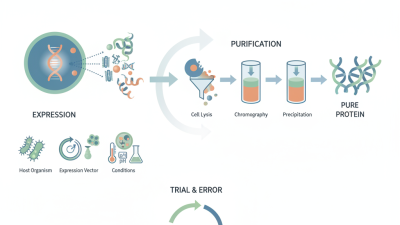
Choosing a protein purification system starts with the molecule, not the instrument. A small, stable protein may suit affinity chromatography followed by size-exclusion polishing. A fragile complex may need gentle ion-exchange conditions and low-shear pumping. Hydrophobic interaction chromatography can help with selected impurities, but it may reduce recovery. Membrane filtration supports fast concentration and buffer exchange, although it cannot replace every chromatography step. I compare binding capacity, selectivity, recovery, processing time, and sample volume before selecting a technology.
System configuration matters just as much. Manual columns offer flexibility and low initial cost for occasional work. Automated systems provide controlled gradients, fraction collection, pressure monitoring, and electronic records. They are valuable when multiple operators need consistent results. A compact benchtop setup may fit milligram-scale development, while a modular skid suits larger batches and expanded process testing. Check tubing paths, sensor accuracy, cleaning access, and compatibility with corrosive buffers. Small dead volumes matter.
Real samples often behave differently from screening data. I once favored automation too early, then found that a simple manual step gave better recovery during method development. That mistake changed my evaluation criteria. The best configuration should allow method changes without costly redesign. Review chromatograms, pressure trends, and recovery data from several runs. Do not judge performance from one successful batch. Reproducibility may expose weaknesses that speed initially hides.
Check Automation, Compatibility, Maintenance, and User Safety
How to Choose the Best Protein Purification System?
Automation should reduce variation, not simply add buttons.
Watch a full demonstration before purchasing. Check how the system handles sample loading, buffer changes, fraction collection, and unexpected pauses. A clear interface helps new operators avoid costly mistakes. However, excessive automation can hide basic process problems. I once trusted a preset method too quickly and overlooked an incorrect column setting. That experience changed my evaluation habits.
Compatibility deserves careful testing with your actual workflow.
Confirm the system supports your sample volume, purification method, tubing size, and required pressure range. Check whether its sensors can detect air bubbles, leaks, and blocked flow paths. Ask for evidence from comparable proteins, not only ideal laboratory examples. Materials touching samples should resist common buffers and cleaning solutions. A small mismatch can damage recovery or distort purity results.
Maintenance affects both productivity and user safety.
Choose accessible fluid paths, simple cleaning procedures, and clear service instructions. Operators should not reach across moving parts or handle pressurized lines without suitable protection. Emergency stops must be visible and easy to use. Record cleaning, calibration, and performance checks in a controlled log. This supports reliable results and shows when a system needs attention. Some maintenance steps may look minor. They are not. Ask how long routine cleaning actually takes at the end of a long purification run. A convenient system is valuable, but only when users can operate it carefully every day.
Select the System That Fits Your Budget and Future Workflows
Choosing the Best Protein Purification System
Select the System That Fits Your Budget and Future Workflows
Choosing a protein purification system is a financial decision as much as a technical one. A low purchase price can hide costs for columns, membranes, buffers, labor, and maintenance. Estimate the cost per purified milligram, not only the instrument price. Record expected sample volume, target purity, and weekly runs before comparing systems. This simple worksheet often exposes unrealistic assumptions.
Your budget should also leave room for future workflows. A system used for one tagged protein today may later handle antibodies, enzymes, or fragile complexes. Check whether it supports different flow rates, detection methods, sample volumes, and separation modes. Ask how easily methods can be adjusted when yield matters more than purity. Look at training time, cleaning steps, and data export, because hidden labor affects every project. Small labs may value modular upgrades more than maximum automation. That is not always obvious.
In my experience, the safest choice is rarely the cheapest or most advanced option. It is the system your team can operate consistently and troubleshoot confidently. Request a realistic demonstration using a sample type close to yours. Review recovery, reproducibility, and consumable use over several runs, not one impressive result. Leave part of the budget for unexpected method development. I would still challenge my own forecast. Protein projects change. A flexible system may protect future work, but flexibility only matters when your staff can use it well.