What is a CRISPR Kit and How Does It Work in Gene Editing?
Gene editing has rapidly evolved, and CRISPR technology is at the forefront. CRISPR kits provide scientists with powerful tools for precise genetic modifications. These kits usually contain essential components like guide RNA and Cas9 protein. Each part plays a vital role in targeting specific DNA sequences.
The simplicity of CRISPR kits is remarkable. Researchers can efficiently design experiments to alter genes in various organisms. This opens doors to breakthroughs in medicine, agriculture, and biotechnology. However, using these kits is not without challenges. There are ethical considerations and potential off-target effects to ponder. The responsibility of wielding such power is significant.
As we explore CRISPR kits further, we must reflect on their implications. How do we ensure safe and responsible use? The journey of gene editing continues to unfold, with many questions left to answer. The message is clear: CRISPR kits hold immense promise, but caution is crucial.

What is a CRISPR Kit?
CRISPR kits are revolutionary tools used in gene editing. They enable scientists to modify DNA with precision. A typical CRISPR kit includes guide RNA and Cas9 protein. The guide RNA identifies the target DNA sequence, while Cas9 acts like molecular scissors. Together, they create specific gene edits.
In recent years, the demand for CRISPR technology has skyrocketed. The global gene editing market is projected to reach $7.6 billion by 2025, according to a report by MarketsandMarkets. This rapid growth reflects the technology's potential. It promises advancements in agriculture, medicine, and biomanufacturing.
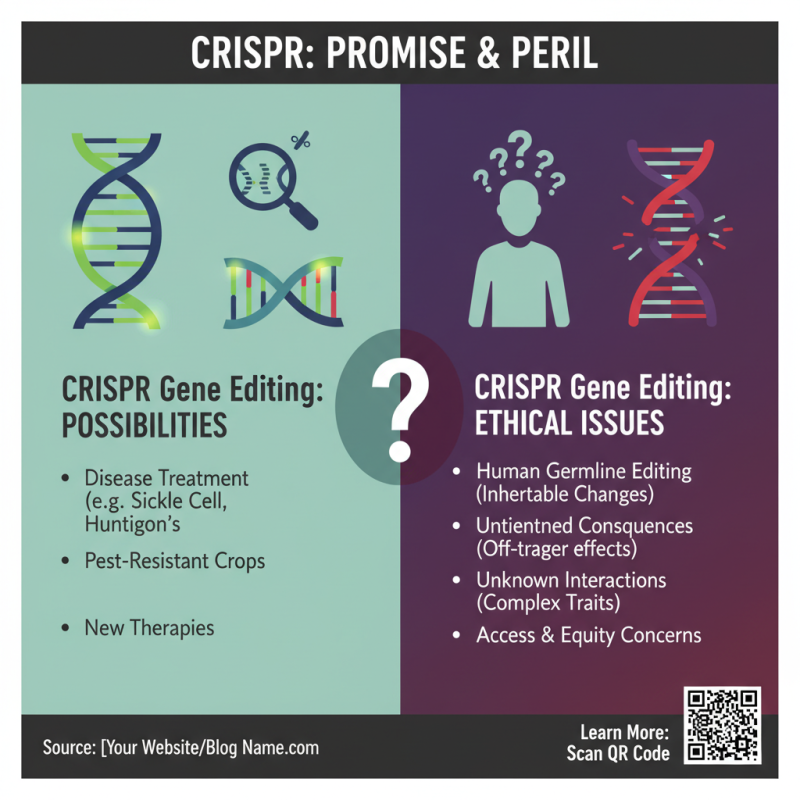
However, challenges remain. Ethical considerations are paramount. The potential for unintended consequences exists. Off-target effects can lead to unexpected mutations, raising safety concerns. Scientists need to tread carefully. Ongoing research is vital. The balance between innovation and ethics must be maintained. CRISPR kits offer incredible potential, but their use requires responsible stewardship.
Components of a CRISPR Kit Explained
A CRISPR kit typically includes several key components essential for gene editing.
The most important parts are the guide RNA (gRNA), Cas9 protein, and a vector for delivery.
The gRNA is tailored to identify the specific DNA sequence that needs modification. It guides the Cas9 protein precisely where to cut the DNA.
The Cas9 protein acts as molecular scissors. Once it receives the signal from gRNA, it creates a double-strand break in the target DNA.
After this, the cell’s natural repair mechanisms kick in. Researchers can then manipulate this repair process to add or delete genetic material.
Tips: Always check compatibility between the gRNA and target DNA. Small mismatches can lead to unintended edits.
It's crucial to design gRNA sequences carefully.
Sometimes, the delivery method can lead to variability in results. Some vectors may not deliver the CRISPR components effectively.
It’s important to experiment with different approaches. Remember, precision is vital, but it's not always perfect.
Mistakes can happen, and they can offer opportunities to learn and improve future experiments.
Mechanism of Action: How CRISPR Edits Genes
CRISPR technology has revolutionized gene editing. Its mechanism relies on a simple yet efficient process. At the core are two main components: a guide RNA and an enzyme called Cas9. The guide RNA is designed to match a specific DNA sequence. This ensures precise targeting during the editing process.
Once the guide RNA finds the target DNA, Cas9 acts like molecular scissors. It cuts the DNA at the specified location. This break can lead to changes in the gene. Sometimes, the cell repairs the cut incorrectly. Other times, a new piece of DNA is inserted. This unpredictable nature raises questions about unintended consequences.
Researchers are exploring the full potential of CRISPR. Some outcomes may be beneficial, while others could pose risks. The balance between innovation and safety is crucial. Open discussions about ethics and control are necessary as this powerful tool continues to advance.
Applications of CRISPR Technology in Research and Medicine
CRISPR technology has quickly become a pivotal tool in both research and medicine. Its ability to alter DNA sequences brings exciting possibilities. Researchers use it to investigate genetic functions. This can lead to breakthroughs in understanding diseases at a molecular level.
In medicine, CRISPR holds promise for treating genetic disorders. Scientists are exploring its use to correct mutations responsible for conditions like sickle cell disease. However, the application of this technology raises ethical concerns. The potential for off-target effects is significant. These unintended changes may lead to health issues, sparking debates about safety.
Moreover, not all experiments yield positive results. Some gene edits may not work as planned. This can hinder progress and may delay treatments for patients in need. The journey of CRISPR technology is filled with hope, but also uncertainty. Continued reflection on its impact is crucial as we move forward.
Applications of CRISPR Technology in Research and Medicine
Ethical Considerations Surrounding CRISPR Gene Editing
CRISPR gene editing offers remarkable possibilities, but it raises significant ethical issues. One major concern is the use of this technology in humans. Altering genes could lead to unintended consequences. For instance, genes connected to complex traits might have interactions not yet understood.
The issue of "designer babies" frequently arises. Parents might choose traits like intelligence or athleticism. This creates a societal divide. Access to gene editing may be limited to affluent families. Such disparities risk deepening existing inequalities.
Tips: Always approach gene editing with caution. Consider the broader implications of your choices. Engage in discussions about ethics in science. Understanding these issues makes informed decisions easier.
Other concerns include genetic privacy. Once a gene is edited, it is permanent. Future generations may inherit these changes, raising questions about consent. Society must contemplate who controls this technology. The potential for misuse exists, necessitating strict oversight.