What is Protein Expression and Purification in Biotechnology?
In the realm of biotechnology, protein expression and purification play vital roles. These processes enable scientists to produce specific proteins in large quantities. Proteins have diverse functions in biological systems, making their study essential. However, achieving effective expression is not always straightforward.
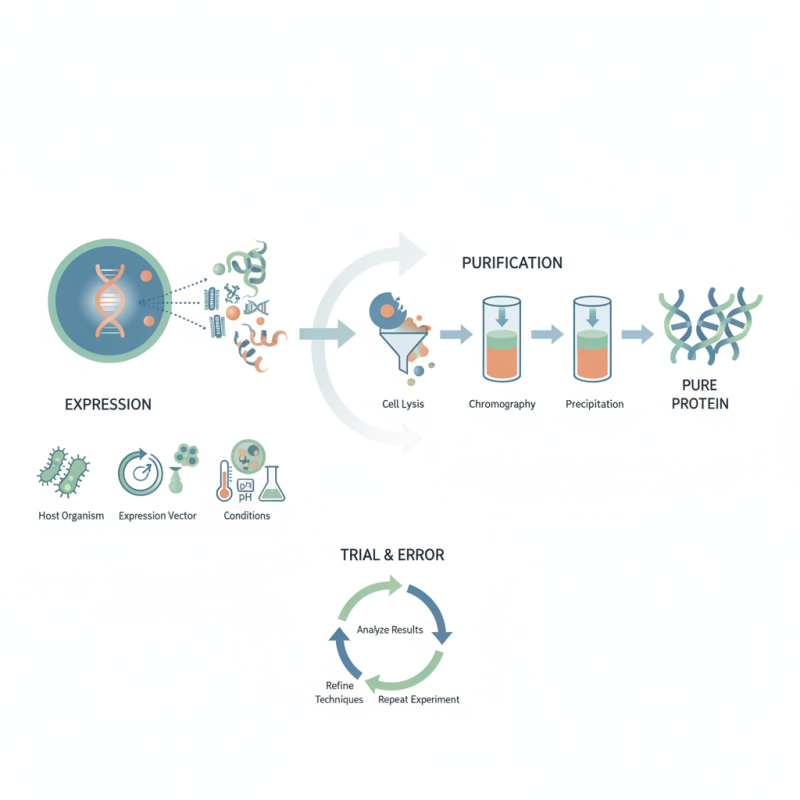
Many factors influence protein expression levels. The choice of host organism, expression vector, and conditions all matter. For instance, bacteria often offer fast growth, but they may not fold proteins correctly. Yeasts and mammalian cells can provide better folding but may grow slower and require more resources. The balance between speed and quality presents challenges.
Purification is equally intricate. Many proteins exist in complex mixtures, and isolating the target protein can be daunting. Standard methods include chromatography, precipitation, and filtration. Each method has limitations that require careful consideration. Scientists must often refine their techniques and reflect on past experiments. The path to successful protein expression and purification is filled with trial and error, but the rewards are invaluable.
Definition of Protein Expression in Biotechnology
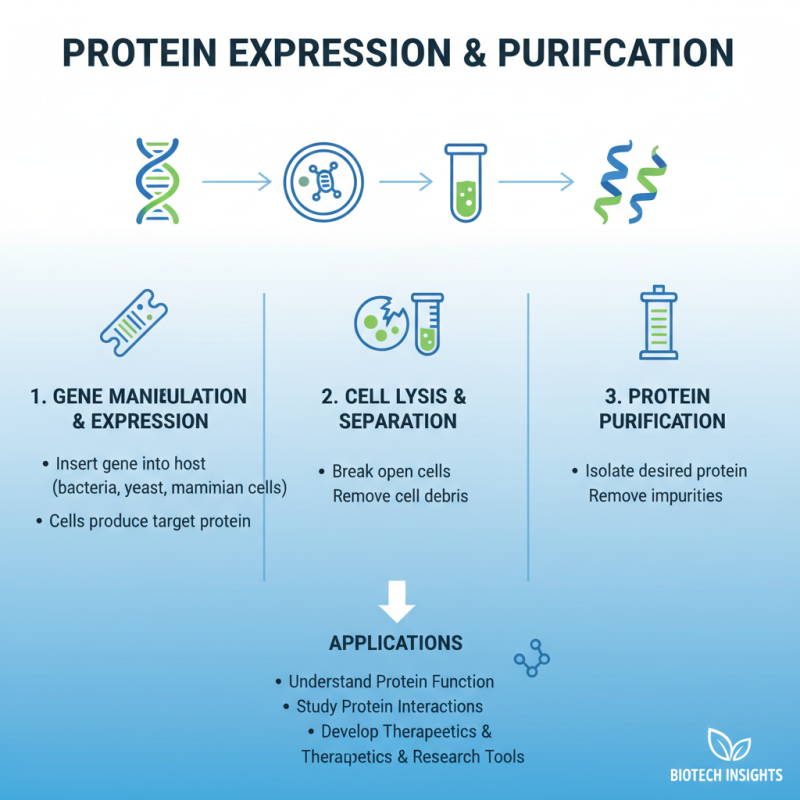
Protein expression in biotechnology refers to the process by which cells produce proteins. This process is essential for research and various biotechnological applications. Scientists often use specific organisms to harness their cellular machinery for protein production. Commonly, bacteria, yeast, and mammalian cells serve as hosts.
Protein expression involves several steps. First, a gene encoding the desired protein is inserted into the host's DNA. Then, the host cells are cultured under specific conditions to promote protein synthesis. While this sounds straightforward, challenges often arise. Sometimes the protein does not fold correctly. Other times, it may degrade too quickly.
Purification follows expression. This step isolates the protein from other cellular components. Different techniques, such as chromatography, are used to achieve this. Yet, not all methods guarantee high purity. It's a process requiring refinement and adjustment. Researchers must continuously learn from failed attempts. Each experience contributes to better techniques in the future.
Methods of Protein Expression: Natural vs. Recombinant Techniques
Protein expression and purification are fundamental processes in biotechnology. These techniques help in the production of proteins for research, therapeutics, and industrial applications. There are two primary methods: natural and recombinant techniques. Each has unique advantages and drawbacks.
Natural protein expression occurs in living organisms. For example, bacteria, yeast, or mammalian cells can produce proteins naturally. This method often yields proteins that are correctly folded and functional. However, the yield can be low. The process is time-consuming and may lead to variations in protein quality. It depends heavily on the source organism and environmental conditions.
In contrast, recombinant protein expression involves genetically engineered organisms. Scientists insert specific DNA sequences into host cells to produce desired proteins. This method allows for larger yields and the possibility of modifying proteins easily. Yet, it can result in improperly folded proteins or aggregates. The purification process can be complex and require optimization. Understanding these nuances is crucial for successful protein production in biotechnological applications.
Overview of Protein Purification Methods in Biotechnology
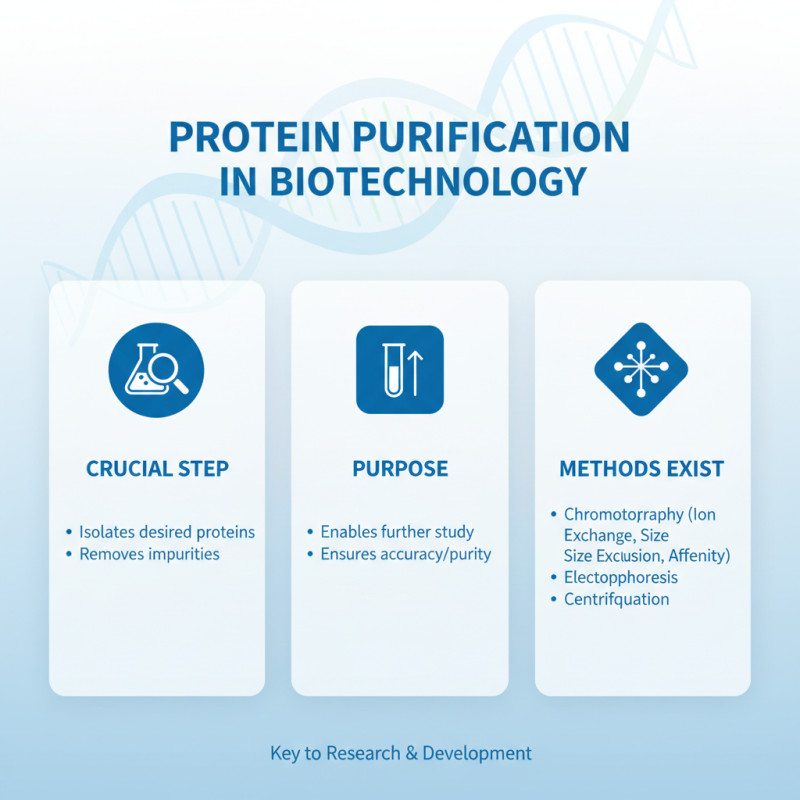
In biotechnology, protein purification is crucial. It ensures that only the desired proteins are isolated for further study. Various methods exist for this purpose, each with its unique advantages and limitations.
Affinity chromatography is a popular technique. It utilizes specific interactions between a protein and its ligand. While effective, it may not always yield pure proteins. Another common method is gel filtration. It separates proteins based on size. However, this may require additional purification steps if proteins are similar in size.
Ion exchange chromatography focuses on the charge of proteins. It can be highly effective but also complex. If not done correctly, it may lead to contamination. Precipitation methods, using solvents or salts, offer another approach but can be unpredictable. Overall, while there are several protein purification methods, each comes with its challenges. Experimentation and optimization are often necessary to achieve the best results.
Challenges and Future Trends in Protein Expression and Purification
In biotechnology, protein expression and purification face several challenges. One major issue is the difficulty in producing proteins in adequate quantities. According to recent reports, around 30% of expressed proteins do not fold correctly. Misfolded proteins can lead to ineffective research outcomes and wasted resources. Moreover, the purification process can be equally daunting, often resulting in low yields and high costs.
Technical advancements have begun to address these issues. For example, new expression systems, such as cell-free systems, offer greater control over protein synthesis. Yet, they are not widely adopted due to high expenses and complexity. Researchers often grapple with balancing cost-efficiency against purity and yield. In fact, a study highlighted that approximately 40% of research funding is lost on inefficient protein purification processes.
Tips: Consider using automation in purification to reduce errors and save time. Also, always prepare for setbacks in protein folding. They are common and can lead to unexpected results. Adopting a methodical approach may allow for troubleshooting and refinement. Embrace flexibility in techniques and stay updated on emerging trends. This adaptability could enhance success rates in protein expression and purification.
What is Protein Expression and Purification in Biotechnology?
| Dimension |
Description |
Challenges |
Future Trends |
| Protein Expression Systems |
Various systems used for producing proteins, including bacterial, yeast, insect, and mammalian cells. |
Difficulty in achieving yield and correct folding of proteins. |
Development of more efficient expression vectors and host systems. |
| Protein Purification Techniques |
Methods such as affinity chromatography, ion exchange, and gel filtration. |
Low purity and recovery rates of desired proteins. |
Innovative techniques including using magnetic beads and automated systems. |
| Applications of Recombinant Proteins |
Usage in therapeutics, diagnostics, and research. |
Regulatory challenges and high production costs. |
Emergence of biosimilars and improved production platforms. |
| Quality Control Measures |
Analytical testing to ensure proteins meet required specifications. |
Inconsistent quality and batch-to-batch variability. |
Integration of real-time monitoring and advanced analytics. |