Why Choose Sanger Sequencing Reagents for Reliable Results?

Why Choose Sanger Sequencing Reagents for Reliable Results?

A clear chromatogram begins before the sequencing instrument starts. It depends on sound sample preparation, carefully balanced reactions, and reagents that perform consistently. Sanger sequencing reagents support the chain-termination chemistry used to read DNA fragments, producing traces that researchers can inspect base by base. When peaks are sharp and background noise is low, interpretation becomes easier. Small details matter: a fresh reagent mix, clean pipette tips, and DNA of suitable quality can all shape the result.

Reliability is not a label on a bottle. It is a pattern across runs. Consistent enzyme activity, well-performing fluorescent terminators, and appropriate reaction conditions help laboratories reduce failed reads and repeat work. Frederick Sanger’s sequencing work established a powerful method, but I cannot verify a direct quotation from him specifically about today’s commercial reagents. A fair takeaway from his work is this: careful experimental design makes sequence data more dependable.

Still, reagents cannot fix every problem. Poor templates, contamination, or unsuitable reaction setup may produce weak or uneven traces, even with a trusted kit. That is worth remembering. Compare reagent performance using controls, read quality, and repeatability under your own laboratory conditions. For routine checks, a clean control chromatogram offers a practical benchmark. Choosing sanger sequencing reagents with documented specifications and dependable technical support can make results easier to reproduce—not automatically perfect, but more trustworthy.
Why Choose Sanger Sequencing Reagents for Reliable Results?

Core Principles of Sanger Sequencing Reagents

Why Choose Sanger Sequencing Reagents for Reliable Results?

Core Principles of Sanger Sequencing Reagents

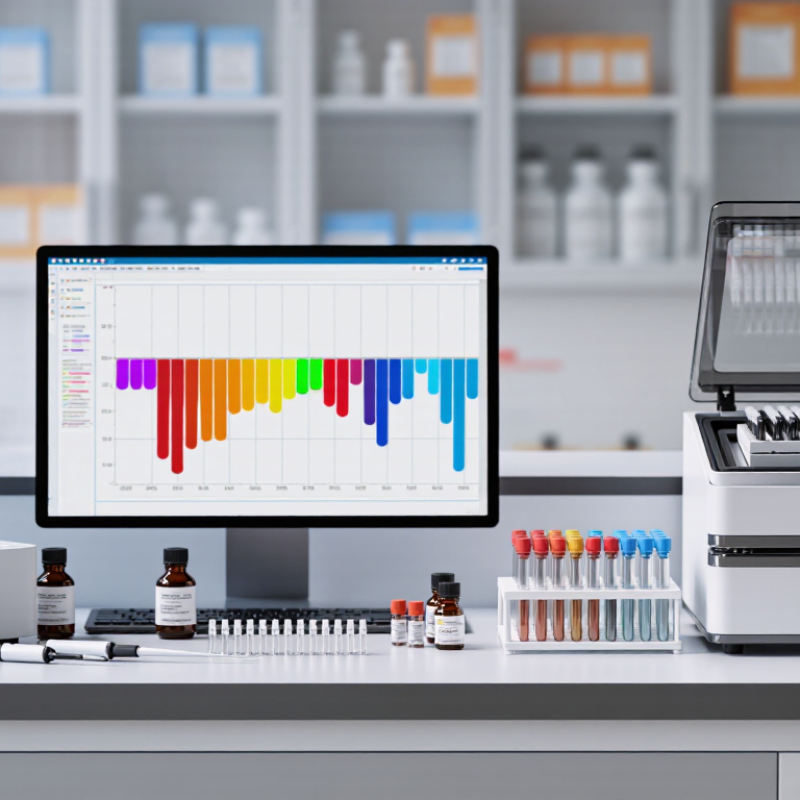
Sanger sequencing reagents work through controlled chain termination. DNA polymerase extends a primer using ordinary nucleotides, while fluorescently labelled dideoxynucleotides stop extension when incorporated. The resulting fragments differ in length by one base. After capillary separation, their fluorescent signals form a trace of colored peaks. Clean peaks matter.

The balance between ordinary nucleotides and terminators shapes that trace. Too much termination can crowd short fragments; too little may weaken signal near the read’s end. Polymerase activity, template purity, salt carryover, and reagent handling also affect peak spacing and background. In practice, a sharp-looking trace is reassuring, but it does not prove every base is correct.

Quality scores help put trace quality into numbers. Ewing and Green’s 1998 Genome Research paper on Phred base-calling describes the logarithmic quality scale: Q20 corresponds to an estimated 1% base-call error probability, and Q30 to 0.1%. These are per-base estimates, not guarantees for an entire sequence. Reviewing chromatograms around mixed peaks or sudden signal drops remains worthwhile; sometimes the template, not the reagent mix, is the weak link.

Key Components and Their Roles in Sequencing Reactions

Why Choose Sanger Sequencing Reagents for Reliable Results?

Key Components and Their Roles in Sequencing Reactions

Reliable Sanger traces start with clean template DNA and a primer that binds one specific region. DNA polymerase extends that primer, adding ordinary dNTPs and fluorescent ddNTPs. Because ddNTPs lack a 3′-OH group, their incorporation stops extension. The resulting fragments are separated by capillary electrophoresis and read as colored peaks. Buffer salts and magnesium support the reaction, but small imbalances can weaken signal or broaden peaks. No reagent mix can rescue a poor template.

NHGRI’s DNA Sequencing Costs database records the cost of sequencing a human genome falling from roughly $100 million in 2001 to about $1,000 by 2016. This is not a Sanger reagent price comparison; it provides useful context for changing sequencing economics. For targeted capillary sequencing, trace quality still matters. Inspect the chromatogram, not only the software’s pass flag. A clean peak helps, but it is not proof.

Tips: Use purified template, one well-matched primer, and fresh reagents. Minimize salt carryover. If peaks overlap, check primer specificity and template concentration before repeating. Primer design is easy to underestimate.

How Reagent Quality Supports Accurate DNA Readings

Reliable DNA readings begin with consistent reagents. In Sanger sequencing, balanced nucleotide concentrations help produce an orderly series of DNA fragments. Fluorescent terminators must also remain stable and perform predictably. If reagent quality varies, peak heights may become uneven, or background signal may obscure weak bases. Small details matter.

A well-prepared reaction mix supports clear chromatogram peaks and more confident base calling. Fresh, correctly stored components reduce the risk of degradation, while clean buffers help maintain the conditions needed for the sequencing reaction. In practice, technicians should check expiration dates, follow storage guidance, and include suitable controls. A clean trace is reassuring, but it is not proof that every base is correct.

Reagents are only one part of accuracy. Poor DNA quality, contamination, or an unsuitable primer can still create ambiguous readings, even when the chemistry is sound. That is worth remembering. Reviewing peak shape and signal quality can reveal when a result needs careful interpretation or repeat testing. Reagent consistency makes dependable results more achievable, not automatic.

Factors for Selecting Reliable Sanger Sequencing Reagents

Why Choose Sanger Sequencing Reagents for Reliable Results?

Selecting dependable Sanger sequencing reagents starts with fit, not price alone. Check that the terminator chemistry, polymerase, and buffer suit your instrument and template. Fresh, properly stored reagents can help reduce weak peaks and noisy chromatograms. Template quality matters, too. Even excellent chemistry struggles with contaminants, strong secondary structure, or uneven DNA concentration.

Use measurable quality criteria. The Phred scoring framework, described by Ewing and Green in Genome Research (1998), links Q20 to an estimated 1% base-call error rate and Q30 to 0.1%. These scores help compare traces, but they do not guarantee every sequence is correct. Review peak shape, background signal, and read length alongside the score. Include a known control and track results across reagent lots. A clean trace can still hide a difficult region. That deserves a second look.

Tips: Keep reagents cold as specified, avoid repeated freeze-thaw cycles, and record lot numbers. Run a control before troubleshooting the sample. If peaks overlap, check template concentration and primer specificity before changing several variables at once. Small steps help isolate the cause.

Why Choose Sanger Sequencing Reagents for Reliable Results? – Factors for Selecting Reliable Sanger Sequencing Reagents

Selection Factor What to Check Reliable-Reagent Indicator Why It Matters
Sequencing chemistry Confirm that the dye-terminator chemistry is compatible with the sequencing instrument and the laboratory’s cycle-sequencing workflow. Clear compatibility information and a protocol specifying reaction setup, cycling, and cleanup. Incompatible chemistry or reaction conditions can reduce signal quality and produce inconsistent traces.
Primer quality For a typical single-primer sequencing assay, check for a specific primer, commonly about 18–25 bases long, with balanced GC content and no strong self-complementarity. A single, specific priming site and a primer design suited to the target sequence and assay conditions. Specific, well-designed primers help generate a clean chromatogram and reduce mixed or weak signals.
Template suitability Assess DNA purity, integrity, concentration, and suitability for the chosen template type, such as plasmid DNA or PCR product. Template quantity and preparation meet the validated protocol; contaminating salts, primers, and excess nucleotides have been removed where required. Impurities and unsuitable template input can inhibit the reaction or interfere with base calling.
Reagent integrity and storage Review storage conditions, expiration date, light protection requirements, and any limits on freeze–thaw cycles. Reagents have been stored as directed, remain within their stated shelf life, and show no evidence of contamination or deterioration. Enzyme or fluorescent-dye degradation can contribute to weak signal and variable sequencing performance.
Reaction consistency Use the recommended reagent volumes, DNA input, primer input, and thermal-cycling conditions for the specific assay. Replicate reactions produce comparable signal patterns and read quality when template and setup conditions are consistent. Consistent reaction setup makes results more reproducible and helps distinguish assay variation from sample differences.
Post-reaction cleanup Choose a cleanup method validated for removal of unincorporated dye terminators and salts before capillary electrophoresis. Cleaned reactions show reduced background and do not retain excessive unincorporated fluorescent signal. Effective cleanup supports clearer electropherograms and more reliable interpretation of sequence data.
Control strategy Include an appropriate known template or other assay control when establishing or monitoring a workflow. The control produces an expected sequencing result under the same reagent and instrument conditions. Controls help identify problems with reagents, reaction setup, cleanup, or instrument performance.
Read quality and usable length Evaluate chromatogram peak resolution, background, signal strength, and the number of bases that meet the laboratory’s quality criteria. Acceptance criteria are defined for the application; usable read length is assessed from the actual trace rather than assumed from the reagent alone. Read quality depends on the combined effects of template, primer, reaction, cleanup, and instrument conditions.
Protocol and technical documentation Check that instructions cover the intended template type, reaction setup, cycling, cleanup, storage, and troubleshooting. Documentation is clear, current, and includes conditions relevant to the laboratory’s workflow. Complete instructions support consistent setup and make it easier to investigate unexpected results.

Note: Recommended reagent amounts and operating conditions vary by chemistry, instrument, template, and assay. Follow the validated protocol for the specific workflow and assess performance using appropriate controls.

Quality Control and Consistency in Sequencing Workflows

Why Choose Sanger Sequencing Reagents for Reliable Results?

Quality control begins before the capillary instrument starts. Reliable Sanger sequencing reagents should support stable fluorescence, efficient extension, and low background noise. These factors shape every peak on the electropherogram. The National Center for Biotechnology Information describes typical Sanger reads as roughly 500–800 usable bases, depending on template quality and reaction conditions. That range is useful, but it is not guaranteed.

Consistency matters more than a single impressive run. In daily laboratory workflows, technicians should track reagent storage temperature, preparation dates, cycle numbers, and signal strength. A small temperature excursion can produce weak peaks or uneven baselines. The European Bioinformatics Institute’s sequencing guidance also emphasizes clean templates and controlled reaction conditions for dependable read quality. Keep records.

Quality checks should include positive controls, no-template controls, and review of ambiguous positions. A clean trace can still hide contamination or mixed templates. That is easy to miss. Reagent lots should be compared using the same control template, not only judged by pass or fail results. The Clinical and Laboratory Standards Institute recommends documented verification, traceability, and ongoing quality assessment for molecular testing workflows. These practices make results easier to reproduce and defend.

Perfect consistency is unrealistic. Operators may pipette differently, and difficult GC-rich regions can remain challenging. That limitation deserves attention, not denial. A better workflow combines qualified reagents, routine control charts, readable electropherograms, and occasional method review. Reliable sequencing is built through repeated evidence, not confidence alone.