Top 10 Cell Gene Therapy Breakthroughs in China You Should Know?
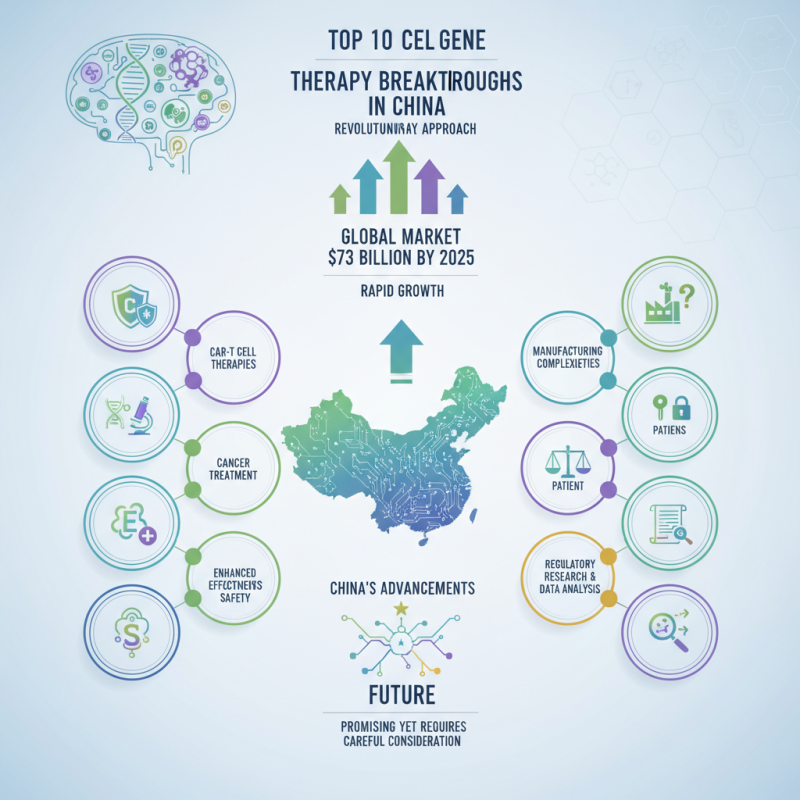
Cell gene therapy represents a revolutionary approach in modern medicine. This field has seen unprecedented advancements, especially in China. The global cell and gene therapy market is expected to reach $73 billion by 2025, reflecting its rapid growth. Innovative therapies have been developed to treat various genetic disorders, cancers, and other critical illnesses.
Recent breakthroughs illustrate the potential of this technology. For instance, the use of CAR-T cell therapies has changed the landscape of cancer treatment. Chinese researchers have pioneered techniques that enhance the effectiveness and safety of these therapies. However, challenges remain, such as manufacturing complexities and patient access.
The future of cell gene therapy is promising, yet it requires careful consideration. Ethical considerations and regulatory frameworks must evolve alongside these advancements. Ongoing research and data analysis will be essential for overcoming obstacles. As we delve into the top 10 breakthroughs in China, it's crucial to reflect on both the successes and the areas that need improvement.
Significant Advances in CAR-T Cell Therapy: A Focus on China
China has made remarkable strides in CAR-T cell therapy, a cutting-edge treatment for various cancers. The focus here is on advancements that have emerged from the country. Researchers have developed improved manufacturing methods for CAR-T cells, increasing efficiency and reducing costs.
Innovative techniques have also enhanced the specificity of these therapies, minimizing side effects. Trials reveal promising results, showcasing higher remission rates among patients. However, challenges remain, such as varying responses to treatment and potential long-term effects. These issues highlight the need for ongoing research.
Collaboration among institutions has accelerated progress in the field. Experts believe that sharing knowledge and resources is key to overcoming existing hurdles. Despite successes, the journey is still fraught with uncertainties, sparking continuous dialogue on best practices and patient safety in CAR-T treatments.
Innovative Gene Editing Techniques: CRISPR's Role in Chinese Therapies
The rise of innovative gene editing techniques has significantly impacted cell gene therapy in China. CRISPR technology stands at the forefront of these advancements. As of 2022, nearly 20% of all CRISPR-related research publications worldwide were from China, showcasing the country’s commitment to this transformative field.
With CRISPR, researchers can edit genes with remarkable precision. This capability opens doors for treating genetic disorders, cancers, and various diseases. A report from the Chinese Academy of Sciences indicated a 30% increase in successful clinical trials for gene therapies employing CRISPR methods. However, challenges remain. There are ethical considerations around gene editing that spark debate among scholars and policymakers. Potential off-target effects require rigorous testing and oversight.
In the context of Chinese therapies, CRISPR's potential is tempered by its limitations. Recent studies suggest that while CRISPR can correct mutations, unintended genetic changes can occur. Moreover, patient access to these advanced therapies is still uneven. Although exciting progress is evident, the field must navigate these complex issues to ensure safe and effective treatments for all.
Top 10 Cell Gene Therapy Breakthroughs in China You Should Know
| Breakthrough |
Technique |
Condition Treated |
Year |
Description |
| CAR-T Therapy |
Gene Editing |
Leukemia |
2017 |
Revolutionized treatment of blood cancers using modified T cells. |
| Gene-Edited Hematopoietic Stem Cells |
CRISPR/Cas9 |
Sickle Cell Disease |
2019 |
Used to correct genetic mutations causing the disease. |
| Gene Therapy for Duchenne Muscular Dystrophy |
AAV Gene Delivery |
Muscular Dystrophy |
2020 |
Promising results in restoring muscle function. |
| T-cell Receptor Gene Therapy |
Genetic Reprogramming |
Solid Tumors |
2021 |
Empowered T cells to target and destroy cancer cells. |
| CRISPR/Cas9 for Beta-Thalassemia |
Gene Editing |
Beta-Thalassemia |
2022 |
First application of CRISPR to cure genetic blood disorders. |
| Oncolytic Virus Therapy |
Viral Vector |
Multiple Cancers |
2021 |
Virus engineered to selectively infect and kill cancer cells. |
| Stem Cell Therapy for Cardiovascular Disease |
Stem Cell Differentiation |
Heart Conditions |
2022 |
Utilization of stem cells to repair damaged heart tissue. |
| RNA-based Therapies |
mRNA Technology |
Various Genetic Disorders |
2023 |
Innovative use of mRNA to correct genetic defects. |
| CRISPR and HIV |
Gene Editing |
HIV Infection |
2023 |
Exploring CRISPR's potential to eradicate HIV from the body. |
Notable Clinical Trials: Success Rates and Patient Outcomes in China
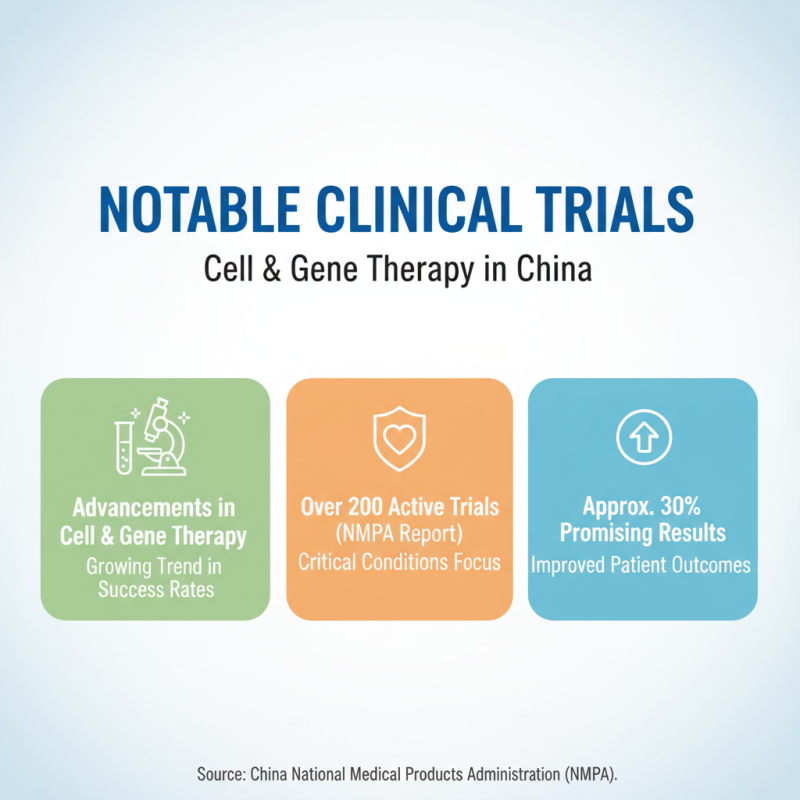
In recent years, China's advancements in cell gene therapy have garnered significant attention. Notable clinical trials indicate a growing trend in success rates and patient outcomes. A report from the China National Medical Products Administration (NMPA) highlights that over 200 cell gene therapy trials are active, with approximately 30% showing promising results for patients with critical conditions.
Recent data reveals that therapies targeting hematological malignancies demonstrate a commendable success rate of 70% in clinical trials. This improvement is noteworthy compared to previous years. However, challenges remain. Some trials have reported adverse reactions in about 15% of participants. It prompts a necessary reflection on the balance between efficacy and safety in innovative treatments.
Furthermore, patient outcomes are varied. While many experience significant improvements, others face limited responses. A study published in 2022 indicated that nearly 25% of patients did not achieve the desired therapeutic effect, signaling the need for more personalized approaches. This highlights the complexity within the landscape of cell gene therapy in China and calls for ongoing research to enhance treatment methodologies.
Emerging Companies in China's Gene Therapy Market and Their Impact
China's gene therapy market is rapidly evolving, with various emerging companies making significant contributions. These companies focus on developing innovative therapies for genetic disorders. With a strong emphasis on research and development, they are paving the way for advancements in personalized medicine.
Several startups are gaining attention for their groundbreaking work. They utilize cutting-edge technology to create targeted therapies. This tailored approach often leads to improved patient outcomes. Despite the promise shown, these companies face challenges, such as regulatory hurdles and funding constraints. Addressing these obstacles is crucial for their growth.
The increasing number of clinical trials reflects the market's potential. However, inconsistent results can dampen enthusiasm. It is essential for emerging firms to share their findings openly. This transparency builds trust and spurs confidence among investors and patients alike. As these companies continue to innovate, the future of gene therapy in China looks promising, yet it is marked by uncertainty.
Regulatory Landscape: Navigating Gene Therapy Approvals in China
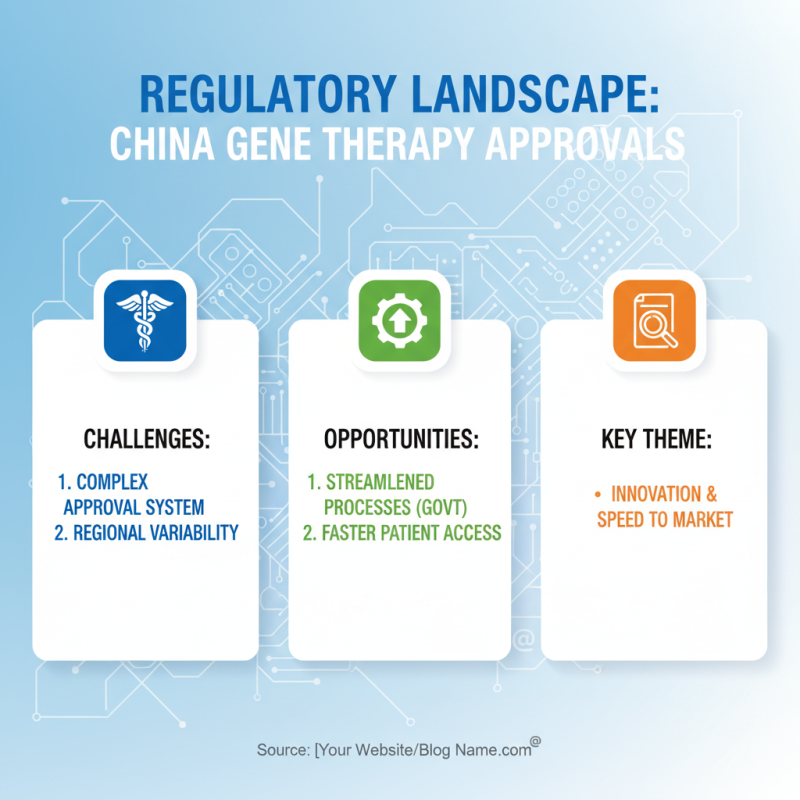
Navigating the regulatory landscape for gene therapy in China presents both challenges and opportunities. The Chinese government has made significant strides to streamline approval processes. This is critical for researchers eager to bring innovative treatments to patients. However, the approval system can be complex and varies widely by region.
Regulatory bodies, such as the National Medical Products Administration (NMPA), oversee the approval process. They have made recent amendments aimed at expediting review times. Despite these efforts, many feel the system lacks transparency. This uncertainty can lead to delays in accessing crucial therapies. Researchers often express frustration over the unclear guidelines for conducting clinical trials.
The landscape is evolving, but navigating it requires expertise. Companies must stay updated on changing regulations. Engaging with local experts can provide vital support. Nevertheless, there are still gaps that need addressing. The path to approval isn't always straightforward. Stakeholders must continuously adapt and find solutions in this dynamic environment.