Top 10 Benefits of Tissue Culture for Modern Agriculture and Horticulture?
Tissue culture is revolutionizing modern agriculture and horticulture. As industry expert Dr. Anne Lee states, “Tissue culture enables consistent quality in plant production.” This technique offers numerous benefits that can enhance crop yield and resilience. According to a recent report by the Food and Agriculture Organization (FAO), tissue culture can potentially increase crop productivity by 30% to 50%.
This method allows for the rapid multiplication of plants, ensuring uniformity and disease resistance. The ability to produce disease-free plants quickly can mitigate risks associated with agricultural losses. However, challenges remain. Not all crops adapt well to tissue culture, and there can be high initial setup costs for laboratories.
Moreover, the reliance on this technology might lead to a lack of genetic diversity. Continuous evaluation is crucial to balance efficiency with ecological considerations. As we explore the top ten benefits of tissue culture, it’s essential to critically assess both its potential and its limitations.
Advantages of Tissue Culture in Crop Production Efficiency
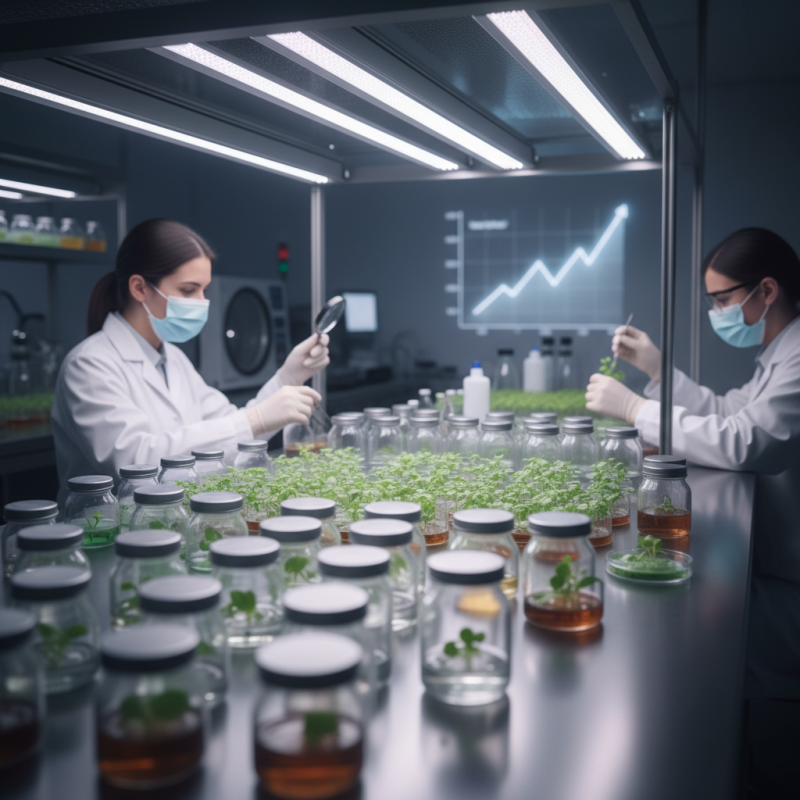
Tissue culture has become a vital technique in modern agriculture. It significantly enhances crop production efficiency. By creating plant clones from small tissue samples, this method allows for the rapid multiplication of desired traits. Farmers can produce uniform crops that are disease-resistant. This uniformity leads to more predictable harvests and reduced loss.
However, tissue culture is not without its challenges. The process requires precise conditions. Factors like temperature and humidity must be closely monitored. A small mistake can lead to contamination, jeopardizing entire batches. This necessitates a learning curve for many growers. Not all plants thrive equally in culture. Some species respond well, while others may not yield the expected results. This unpredictability can be frustrating.
Despite these hurdles, the benefits are evident. Increased efficiency means higher productivity on limited land. Farmers can meet growing food demands with fewer resources. This approach allows for innovation in sustainable practices. It creates opportunities for enhancing biodiversity. Yet, the balance of technology and nature must always be considered.
Enhancing Crop Varieties Through Tissue Culture Techniques
Tissue culture has emerged as a vital technique in agriculture and horticulture. It allows for the rapid propagation of desirable crop varieties. By utilizing sterile environments, scientists can create genetically identical plants. This method enhances uniformity in crops, improving yields. According to a report by the Food and Agriculture Organization, tissue culture can increase production rates by 30% to 50%.
Moreover, tissue culture techniques enable the development of disease-resistant varieties. Plants developed through this method often demonstrate greater resilience to conditions like drought and pests. A study highlighted that using tissue culture can reduce crop loss due to diseases by up to 80%. However, challenges remain. The high cost of equipment and skilled labor can be a hurdle for small-scale farmers. Accessibility to necessary technology is limited in some regions.
While tissue culture offers numerous benefits, the reliance on this technology may lead to reduced genetic diversity. This dependency could make crops more vulnerable to emerging threats. Balancing the use of tissue culture with traditional breeding methods could ensure sustainability. Enhancing crop varieties is not just about increasing yields but also fostering a robust agricultural ecosystem.
Improvement of Disease Resistance Using Tissue Culture
Tissue culture is revolutionizing modern agriculture. One significant benefit is the improvement of disease resistance in plants. In recent years, plant tissue culture techniques have gained traction. Farmers can now produce healthy, disease-free plants through this method. By cultivating plant cells in a sterile environment, researchers can eliminate pathogens. This approach ensures that the plants have strong defenses against diseases.
The process is not without its challenges. Tissue culture requires precision and a controlled setting. It can be expensive and time-consuming. Moreover, not all plants respond well to tissue culture. Some species may exhibit variability in disease resistance after culturing. Therefore, further research is necessary to optimize techniques and improve outcomes. Researchers are continually working to enhance these methods.
Farmers increasingly recognize the value of tissue culture. It helps them grow crops that thrive in challenging conditions. Enhanced disease resistance leads to higher yields and better quality produce. However, growers need to remain vigilant about potential drawbacks. Each plant’s response can vary, and regular evaluation is essential. Overall, tissue culture presents promising opportunities for improving crop resilience in agriculture.
Cost-Effectiveness of Tissue Culture in Horticulture Practices
Tissue culture has become a game-changer in horticulture practices. Its cost-effectiveness makes it a popular choice among modern farmers. By producing disease-free plants, it reduces losses and increases yields. The initial investment may seem high, but the long-term savings on pesticides and fertilizers are significant.
One crucial tip is to master the process of propagation. For best results, ensure sterile conditions during culture. Contamination can ruin an entire batch. Small mistakes here can lead to wasted resources. It's essential to follow each step precisely.
Another point to consider is the choice of plant species. Some plants thrive better in tissue culture than others. Researching the specific requirements can save both time and money. It’s tempting to rush, but understanding your plants is key. Patience in this stage pays off later. Delays may cost more in the long run, but the right approach yields healthy, strong plants.
Environmental Sustainability Achieved Through Tissue Culture Methods
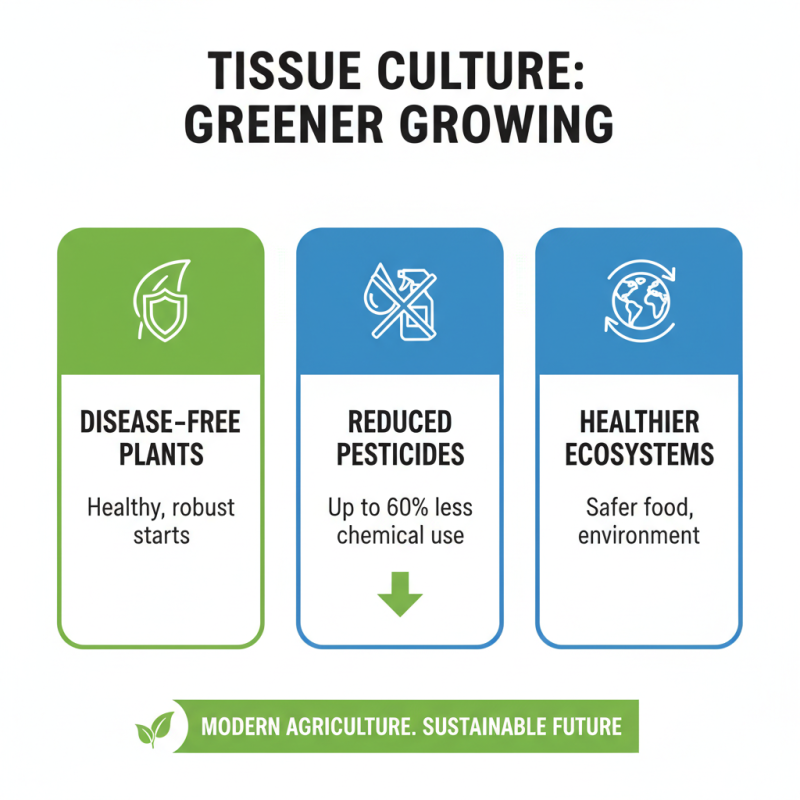
Tissue culture, a key technique in modern agriculture and horticulture, offers significant environmental benefits. By using this method, growers can produce disease-free plants efficiently. It reduces the need for harmful pesticides, which is a major advantage. A study indicated that tissue culture can decrease pesticide use by up to 60%. This leads to healthier ecosystems and safer food for consumers.
Tips: Choose local species for tissue culture. They often adapt better to the environment and require fewer resources.
Additionally, tissue culture enhances biodiversity. It allows for the propagation of rare and endangered plant species. Farmers can create genetic diversity in crops, making them resilient to diseases and climate change. An industry report suggests that genetic diversity can boost crop yields by 10-20%. However, some growers may rely too heavily on a few varieties, which can be risky.
Tips: Experiment with different varieties, but be mindful of balance. Maintaining diversity can prevent future agricultural challenges.