Top 10 Types of Cell Lines for Global Buyers?
Choosing cell lines for a global research program is not simply a matter of selecting a familiar name. The right model depends on the research question, assay, culture conditions, and available expertise. Some buyers need production hosts such as CHO cells; others may consider HEK293, Vero, HeLa, A549, Jurkat, hybridoma, or stem-cell-derived models. Each has distinct strengths and limitations. No line fits every study. A useful guide should explain common applications, important constraints, and the records buyers should request. Those details matter.
Before ordering, compare authentication data, mycoplasma test results, passage information, source, and recommended handling conditions. Ask whether the supplier provides clear documentation and support for appropriate shipping and storage. Requirements for research materials can vary by destination, institution, and supplier, so buyers should confirm applicable policies before purchasing or transferring a line. This is practical guidance, not legal advice. Global availability does not guarantee universal suitability. Even a well-documented cell line may behave differently across laboratories, and familiar models do not capture every feature of human biology. A comparison can narrow the options, but it cannot replace a project-specific review. Some uncertainty remains. This overview introduces ten commonly encountered types and offers a grounded starting point for evaluating them responsibly.
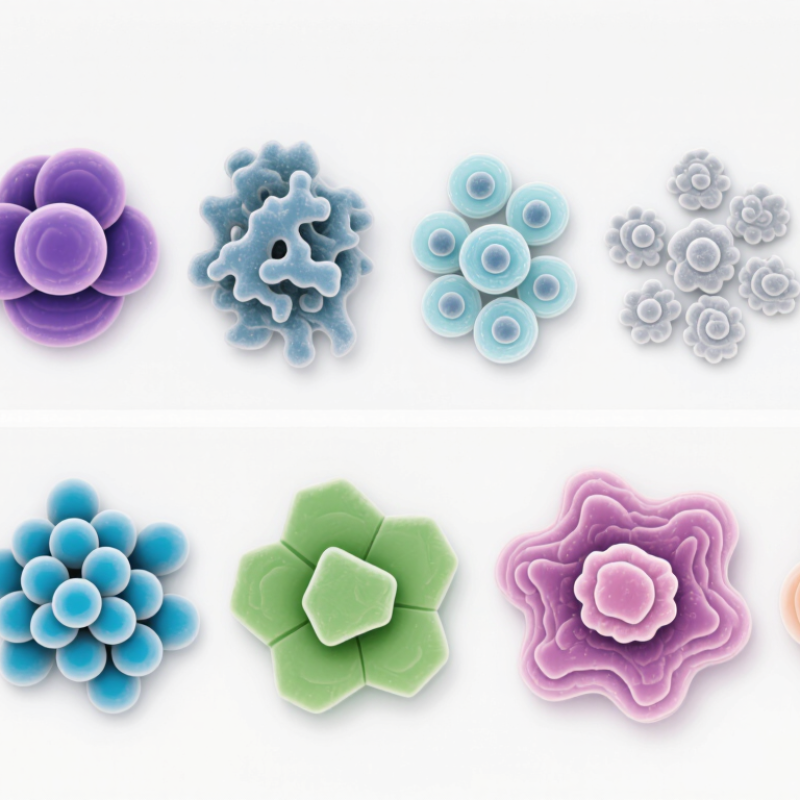
Top 10 Cell-Line Types: An ATCC/ECACC Data Map for Global Buyers
A repository-based data map helps global buyers compare ten major cell-line types: primary, immortalized, stem, induced pluripotent, hybridoma, tumor, fibroblast, epithelial, endothelial, and neuronal lines. Each record should show species, tissue source, genotype, passage history, authentication method, contamination testing, and biosafety classification. This detail turns a catalogue into a purchasing tool. It also exposes gaps.
Recent global cell-culture market reports forecast sustained growth through 2030, driven by drug discovery, vaccine research, and regenerative medicine. Public biobank records commonly show that immortalized and tumor-derived lines offer long experimental lifespans. Primary and stem-cell models often provide stronger physiological relevance, but they may vary between donors and passages. Buyers should compare these trade-offs, not only prices.
The WHO Laboratory Biosafety Manual emphasizes risk assessment, traceability, and documented handling procedures. OECD guidance also supports reliable records for biological materials and study reproducibility. A practical data map should therefore link every line to its source record, certificate, storage conditions, and quality-control results. It should flag missing information clearly.
The map is not perfect.
Some entries lack recent genomic confirmation. Others describe contamination screening without reporting the test date. That weakness matters. Global buyers should request current authentication evidence before importing or scaling a project. A useful dashboard can rank confidence levels, but human review remains necessary. Data should guide judgment, not replace it.
1–3 | HeLa, HEK293, and CHO: Origin, Passage, and Production Data
Top 10 Types of Cell Lines for Global Buyers?
1–3 | HeLa, HEK293, and CHO: Origin, Passage, and Production Data
HeLa cells originated from a cervical tumor sample collected in 1951. They remain valuable for cancer biology, virology, and assay development. Their approximate doubling time is 20–30 hours, but growth changes with medium, density, and passage history. Global buyers should request STR authentication, mycoplasma results, and a documented passage number. ICH Q5D treats cell-substrate identity and stability as critical quality considerations.
HEK293 cells came from human embryonic kidney cells transformed with adenoviral DNA in 1973. They commonly double within 24–36 hours and support transient expression, viral-vector research, and protein studies. However, passage number alone is not enough. A low-passage vial can still perform poorly after shipping stress or unsuitable recovery. A 2023 review in Biotechnology Advances reported that HEK293-derived systems remain widely used for rapid, small-to-medium scale production, while process output varies greatly between clones.
CHO cells originated from Chinese hamster ovary tissue in 1957. Their robust suspension growth makes them a major platform for therapeutic proteins. Industry reviews often estimate that CHO systems produce roughly 70% of marketed recombinant protein medicines. Typical doubling times range from 18–30 hours. Buyers should compare viable cell density, productivity, glycosylation data, and passage stability. That shortcut is tempting, but incomplete. A production claim without batch records deserves careful questioning.
4–6 | Vero, A549, and MCF-7: Viral, Lung, and Tumor-Model Benchmarks
For global buyers, Vero, A549, and MCF-7 represent three practical research benchmarks. Each line answers a different laboratory question. Vero cells are commonly selected for viral research and vaccine-related assay development. Their stable growth supports clear observation of cell changes. However, viral susceptibility can vary between sublines and passage histories. Buyers should request authentication data, mycoplasma results, and recommended culture conditions.
A549 cells provide a useful lung-derived model for respiratory toxicology and cancer biology. Their flat, adherent growth makes daily microscopy easier. Researchers can monitor confluence, morphology, and treatment response with routine equipment. Still, A549 cells do not reproduce the full structure of human lung tissue. Results should be interpreted with primary cells, organoids, or other models when possible. Small details matter, including seeding density, medium preparation, and passage number.
MCF-7 is widely used in breast tumor-model studies, especially for hormone-responsive research. Its response can change with culture conditions and experimental design. Buyers should confirm receptor-related characteristics rather than relying only on the product label. These models are useful, but not flawless. A common purchasing mistake is comparing prices before checking documentation, shipment temperature, and replacement support. Better decisions come from matching the cell line to the endpoint, local biosafety rules, and the laboratory’s actual technical capacity.
Top 10 Cell Lines Used by Global Research Buyers
This chart compares widely used research cell lines by their reported year of establishment. Vero, A549, and MCF-7 represent viral production, lung biology, and breast cancer modeling, respectively.
7–10 | Jurkat, NIH-3T3, Caco-2, and iPSC: Assay Metrics
Jurkat cells are useful for immune-activation screening. Buyers should track viability, CD69 expression, cytokine release, and concentration-response curves. A clear assay should include untreated and stimulated controls.
NIH-3T3 cells support cytotoxicity and transformation studies. Measure live-cell percentage, colony formation, morphology, and population doubling time. OECD Test Guideline 487 emphasizes reproducible exposure conditions and control performance for mammalian cell assays. Passage number still changes results.
Caco-2 models require tighter barrier measurements. Record transepithelial electrical resistance, apparent permeability, recovery after dosing, and monolayer integrity. Report permeability in cm/s, not only “high” or “low.” Published regulatory assessments often use multiple markers because one value cannot describe absorption reliably.
iPSC assays need deeper verification. Track viability, OCT4, SOX2, TRA-1-60, karyotype stability, and directed differentiation efficiency. A 2023 industry analysis of cell-based manufacturing also identified identity, viability, and potency as core release attributes.
These are useful, but research-grade iPSC data may still vary between passages.
Tips: Request raw control values, passage history, donor information, and acceptance limits. Use at least three independent runs. Do not compare Jurkat and iPSC results with one universal threshold.
That shortcut fails. Statistical power is often weaker than buyers expect, especially for differentiation assays. Verify recovery after shipping, because frozen vials can show acceptable viability but poor functional response.
Global Buying Filters: STR Profiles, Mycoplasma Tests, ISO 20387, and Biosafety
For global buyers, a cell line’s name is only a starting point. Request its STR profile when purchasing a human line, and compare the reported alleles with a recognized reference database. STR testing can reveal misidentification or cross-contamination, but it does not confirm every feature of a culture. For non-human lines, ask which identification method was used and whether it suits that species.
Mycoplasma can alter cell behavior without making a culture look obviously unhealthy. Request a recent test report, including the method and test date, and agree on retesting after receipt. A clean result matters. Still, one negative test is a snapshot, not a promise that contamination can never occur. Keep incoming cells separate until your own checks are complete.
Review how records are maintained, not just whether a supplier mentions ISO 20387. The standard concerns biobanking competence; it is not a blanket certificate for every cell line or shipment. Ask for traceable passage history, storage conditions, recovery notes, and clear handling instructions. Biosafety documentation should identify the material and its known risks, while your institution determines suitable containment for the intended work. Rules and classifications can differ by location. Paperwork may look complete, yet one missing passage number can complicate an experiment. That detail deserves a question.
Top 10 Types of Cell Lines for Global Buyers? — Global Buying Filters: STR Profiles, Mycoplasma Tests, ISO 20387, and Biosafety
| Cell line type | Representative examples | Common research applications | STR profile filter | Mycoplasma test filter | ISO 20387 and documentation | Biosafety and shipping checks |
|---|---|---|---|---|---|---|
| Human cervical carcinoma | HeLa | Cell biology, virology, cancer research, and assay development | Request a human STR profile and compare it with an authoritative reference profile; check for cross-contamination. | Request a recent, lot-specific negative result and the test date; PCR or culture-based methods may be used. | ISO 20387 concerns biobanking competence. Check whether the supplier’s accreditation scope covers the relevant collection or service; it is not a cell-line quality certificate. | Human-derived lines are commonly handled under BSL-2 practices in many settings. Confirm the supplier’s risk information and follow local institutional rules. |
| Human embryonic kidney-derived | HEK 293 | Recombinant protein expression, transfection, and pathway studies | Request a human STR profile and a documented match to the stated line identity. | Require a recent negative test result for the supplied culture or lot. | Review traceability, handling records, and the scope of any ISO 20387 accreditation claimed by a biobank. | Verify the exact derivative and any introduced genetic material. Apply the applicable institutional risk assessment and shipping requirements. |
| Chinese hamster ovary (CHO) | CHO-K1 and related CHO derivatives | Recombinant protein production, bioprocess development, and cell engineering | Human STR testing is not applicable. Request species-appropriate identity testing and documentation of the specific CHO derivative. | Request a recent negative result; mycoplasma testing is relevant for non-human as well as human cultures. | Check collection and handling traceability and whether any stated ISO 20387 accreditation covers the service provided. | Risk classification can depend on the exact strain and modifications. Confirm the supplier’s safety data and local requirements; do not infer a classification from the cell type alone. |
| African green monkey kidney-derived | Vero | Virology, vaccine-related research, and viral propagation studies | Human STR testing is not applicable. Request species-specific identity confirmation and the exact line designation. | Request a recent negative mycoplasma result, with method and test date. | Review provenance and quality records; ISO 20387 applies to biobanking competence within an accreditation scope, not directly to the cell line. | Assess the work involving the specific virus or agent separately. Follow institutional containment rules and applicable transport regulations. |
| Human T-lymphoblastoid | Jurkat | T-cell signaling, immune-response assays, and gene-expression studies | Request a human STR profile and verify the identity of the specific subline. | Ask for a recent negative test result covering the supplied lot or culture. | Request chain-of-custody and passage or culture-history records; check accreditation scope where ISO 20387 is cited. | Human-origin material commonly requires enhanced standard precautions and may be handled at BSL-2 in many institutions; follow local risk assessment. |
| Human chronic myeloid leukemia-derived | K-562 | Hematology, leukemia biology, and natural-killer-cell cytotoxicity assays | Request a human STR profile and compare it with a reference for the stated line. | Require a recent negative mycoplasma test and clear lot identification. | Check supplier records for identity, storage, and distribution history. ISO 20387 is relevant only when the provider’s accredited biobanking scope applies. | Use the supplier’s safety guidance and local institutional containment requirements for human cell cultures. |
| Human monocytic leukemia-derived | THP-1 | Monocyte and macrophage differentiation, inflammation, and innate-immunity studies | Request a human STR profile; confirm that the stated differentiation or subline history is documented where relevant. | Request a recent negative result and retest after receipt according to the laboratory’s quality procedures. | Review provenance and records for any selected subline; verify the scope of any ISO 20387 accreditation claim. | Human-derived cells may require BSL-2 practices in many settings. Apply local biosafety review, especially for differentiated or experimentally modified cultures. |
| Human lung carcinoma | A549 | Respiratory biology, toxicology, and cancer research | Request a human STR profile and a documented identity comparison. | Ask for a recent negative test for the supplied culture or lot. | Check traceability and the supplier’s quality documentation; ISO 20387 does not by itself establish identity or sterility of a particular vial. | Confirm the line’s safety information and follow institutional risk assessment and applicable import or shipping rules. |
| Human liver tumor-derived | HepG2 | Hepatic metabolism studies, toxicology, and liver-related assay development | Request a human STR profile and check that the profile corresponds to the specified line. | Request a current negative mycoplasma result and record the date and method. | Review identity, storage, and handling records. Treat ISO 20387 as a biobank competence standard whose relevance depends on the provider’s accredited scope. | Confirm handling guidance for the exact material and any modifications; comply with local biosafety and transport requirements. |
| Human colorectal carcinoma | Commonly used colorectal carcinoma lines, such as HCT 116 | Tumor biology, drug-response studies, and molecular oncology | Request a human STR profile for the exact line and any subline; avoid relying on the line name alone. | Require a recent negative mycoplasma result with lot or culture identification. | Request provenance and quality records, and verify whether an ISO 20387 accreditation scope applies to the provider’s biobanking activity. | Human-derived lines are often managed using BSL-2 practices, but the correct requirements depend on local risk assessment and the exact material. |
Buyer note: STR profiling is primarily an identity tool for human cell lines; it is not an appropriate identity method for non-human lines. Mycoplasma status should be supported by a dated test record. ISO 20387 applies to biobanking competence within a defined accreditation scope and should not be interpreted as certification of an individual cell line. Biosafety classifications and shipping rules vary by material, jurisdiction, and intended work, so verify current supplier documentation and local requirements before purchase.
Related Posts
-
2026 Best Cell Lines for Biomedical Research and Their Applications?
-

What Are Cell Lines and How Are They Used?
-
How to Choose the Right Cell Lines for Your Research Needs?
-

What Are the 2026 Best PCR Reagents for Global Buyers?
-

What Are the Best Products for Life Sciences in 2026?
-

2026 Top Mycoplasma Detection Kits for Global Buyers?
