Top 10 Expression Systems for Biotechnology Research and Application?
Biotechnology research heavily relies on effective expression systems. These systems are essential for producing proteins, enzymes, and other biological molecules. According to a recent report by Grand View Research, the global protein expression market is expected to reach $3.10 billion by 2028. This growth reflects the increasing significance of biotechnology in healthcare and agriculture.
Dr. Alice Green, a renowned expert in bioprocessing, emphasizes the importance of choosing the right expression system. She states, “The choice of expression systems can make or break research outcomes.” Understanding the advantages and drawbacks of various systems is crucial for optimizing performance. The right approach can greatly influence yields and efficiency.
Despite advancements, challenges remain in the field of expression systems. There are trade-offs in scalability, cost, and the specific biochemical requirements of each system. Researchers must critically evaluate these factors to ensure reliable results. The future of biotechnology hinges on improving expression systems and addressing these complexities.

Overview of Expression Systems in Biotechnology
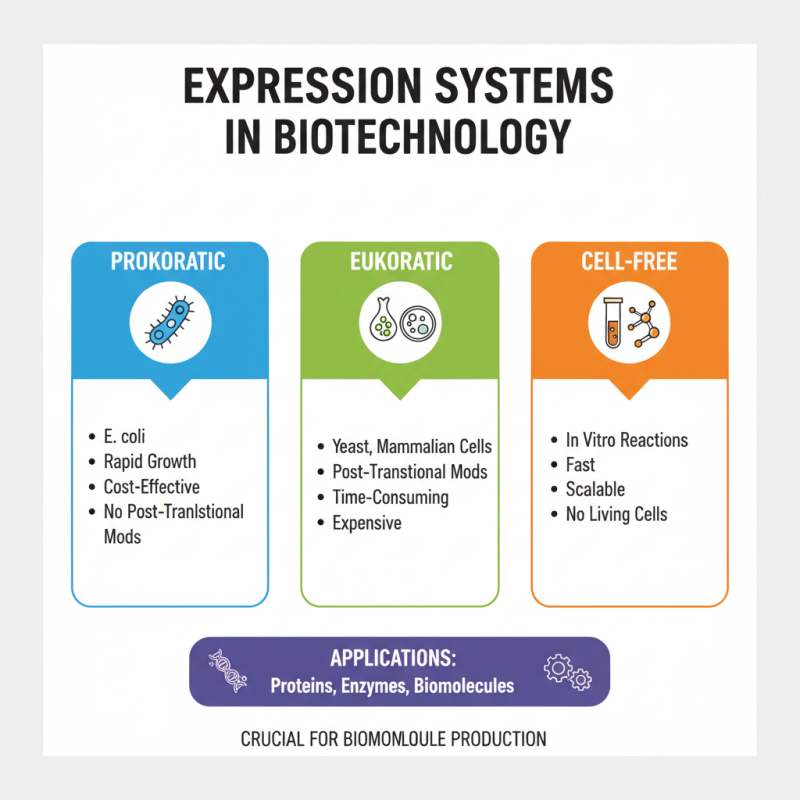
In biotechnology, expression systems are crucial for producing proteins, enzymes, and other biomolecules. These systems can be classified into prokaryotic, eukaryotic, and cell-free platforms. Prokaryotic systems, like E. coli, are popular due to their rapid growth and cost-effectiveness. However, they may lack post-translational modifications. In contrast, eukaryotic systems such as yeast and mammalian cells effectively perform these modifications, yet they are more time-consuming and expensive.
Recent reports indicate that the global recombinant protein market reached $15 billion in 2021 and is projected to grow significantly. This growth reflects the rising demand for biologics in therapeutic applications. Understanding the pros and cons of various expression systems can greatly enhance research outcomes.
**Tip:** When choosing an expression system, consider the specific requirements of your target protein. Different systems may yield varying quantities and qualities.
A common challenge in this field is optimizing the conditions for protein expression. Many researchers face difficulties when scaling up production. This can lead to issues with yield and quality, which are critical for therapeutic applications. Continuous refinement of protocols is essential for improved results.
**Tip:** Don't hesitate to run small-scale experiments to identify optimal conditions before moving to larger scales. This can save time and resources in the long run.
Criteria for Selecting an Expression System
When selecting an expression system for biotechnology research, multiple criteria come into play. The compatibility of the system with the target protein is crucial. Consider whether the system can perform post-translational modifications. Also, examine the expression levels you can achieve. Some systems work better for high yields, while others excel in complex protein structures.
Host organism choice impacts your results significantly. Bacterial systems can rapidly produce proteins, yet they often lack necessary modifications. Yeast, on the other hand, offers a balance of speed and complexity. Cell cultures, such as mammalian cells, provide the most accurate folding but require more resources and time. Always weigh the advantages against the costs involved.
Despite having clear criteria, researchers need to reflect on their priorities. Do you need speed, cost-effectiveness, or quality? Every project is unique. Some systems may seem perfect but might introduce unexpected challenges. Understanding these nuances helps refine your decision-making process, ensuring a more suitable choice for your specific application.
Top Eukaryotic Expression Systems in Research
Eukaryotic expression systems play a crucial role in biotechnology research. These systems allow for post-translational modifications, important for producing functional proteins. Common eukaryotic hosts include yeast, insect cells, and mammalian systems. Each host has unique advantages and limitations. Yeast, for instance, is easier to manipulate, but lacks some modifications found in mammalian cells.
Understanding the differences is key. Mammalian systems provide optimal folding and glycosylation. However, they can be expensive and time-consuming to scale up. Insect cells offer a middle ground, being efficient and cost-effective, yet they may not fully mimic mammalian post-translational processes.
Tips: When choosing an expression system, consider production scale and protein complexity. Experimenting with multiple systems can lead to better outcomes. Always be prepared for troubleshooting, as unexpected results can occur. It's essential to remain flexible in your approach to find the best solution.
Prominent Prokaryotic Expression Systems and Their Applications
Prokaryotic expression systems play a crucial role in biotechnology. Bacteria, especially Escherichia coli, are widely used for protein production. They offer rapid growth and simple cultivation. However, these systems have limitations. For example, they may produce misfolded proteins or lack post-translational modifications. This can affect the biological activity of the proteins.
Another prominent system involves Bacillus subtilis, known for its ability to secrete proteins into the culture medium. This feature simplifies protein purification. Yet, the yield can vary significantly. Researchers sometimes face challenges with plasmid stability in these organisms. While prokaryotic systems are efficient, they are not universally optimal for all proteins.
Strains like Pseudomonas fluorescens offer unique advantages. They can express complex proteins and are less prone to mishaps in protein folding. Still, working with these systems requires careful optimization. Variable results demand significant adjustments during the experimental process. Each prokaryotic system presents a unique set of advantages and challenges for researchers in the field.
Top 10 Expression Systems for Biotechnology Research and Application
| Expression System |
Organism |
Advantages |
Applications |
| pET System |
Escherichia coli |
High yield, fast growth |
Protein expression, enzyme production |
| BAC (Bacterial Artificial Chromosome) |
Bacillus subtilis |
Stable maintenance of large fragments |
Genomic library construction |
| T7 System |
Escherichia coli |
High-level expression |
Protein characterization |
| pGEX System |
Escherichia coli |
Facilitates purification via GST tag |
Protein purification studies |
| Staphylococcus Expression System |
Staphylococcus carnosus |
Post-translational modifications |
Therapeutic protein production |
| Lactic Acid Bacteria System |
Lactococcus lactis |
GRAS status, secretion capability |
Probiotic bacteria production |
| Baculovirus Expression Vector System |
Insect cells |
Post-translational modifications |
Complex eukaryotic protein production |
| Yeast Expression System |
Saccharomyces cerevisiae |
Eukaryotic post-translational modifications |
Vaccine production, enzyme expression |
| Mammalian Cell Expression System |
Chinese Hamster Ovary (CHO) cells |
Appropriate folding, glycosylation |
Therapeutic proteins, antibodies |
Emerging Trends and Innovations in Expression Systems
In recent years, expression systems have undergone significant advancements. These innovations have transformed biotechnology research. Researchers are increasingly exploring new vectors and host organisms. This shift opens doors to more efficient protein production. Rapid developments in synthetic biology play a crucial role in this evolution.
CRISPR technology is a standout trend. Researchers use it to improve gene expression in various systems. These innovations enhance yield and quality. However, challenges remain. Not all systems work for every protein, and optimization can be time-consuming. These issues highlight the importance of tailored approaches in research.
Emerging systems like cell-free expression platforms gain popularity. They offer rapid results with flexibility. However, scalability is often a concern. Researchers must balance speed with production feasibility. Technologies like these are promising but still require fine-tuning. Exploring their full potential will take time and effort. The journey in optimizing expression systems continues.