Top 10 Human Cell Lines Used in China for Research and Development?
The field of biomedical research is increasingly reliant on human cell lines for various studies. In China, numerous cell lines serve as essential tools for drug development, disease modeling, and regenerative medicine. According to a report by the China National Center for Biotechnology Development, human cell lines have become crucial due to their applicability in personalized medicine and cancer research. Dr. Liu Wei, a prominent researcher in cell biology, states, "Human cell lines provide a window into the complexities of human diseases."
The availability of diverse human cell lines facilitates innovation and accelerates research progress. In the Chinese market, the demand for high-quality cell lines is expanding. However, challenges remain in standardization and authentication. Specific cell lines may yield different results based on genetic or environmental factors. Misidentification can lead to flawed conclusions, highlighting the importance of rigorous validation practices in research.
As the industry continues to evolve, it is vital to address these concerns. Ensuring the integrity of human cell line research is essential for the advancement of therapeutics. Researchers must remain vigilant to uphold the reliability of their findings. The future of human cell lines will depend on collaboration and commitment to excellence in science.

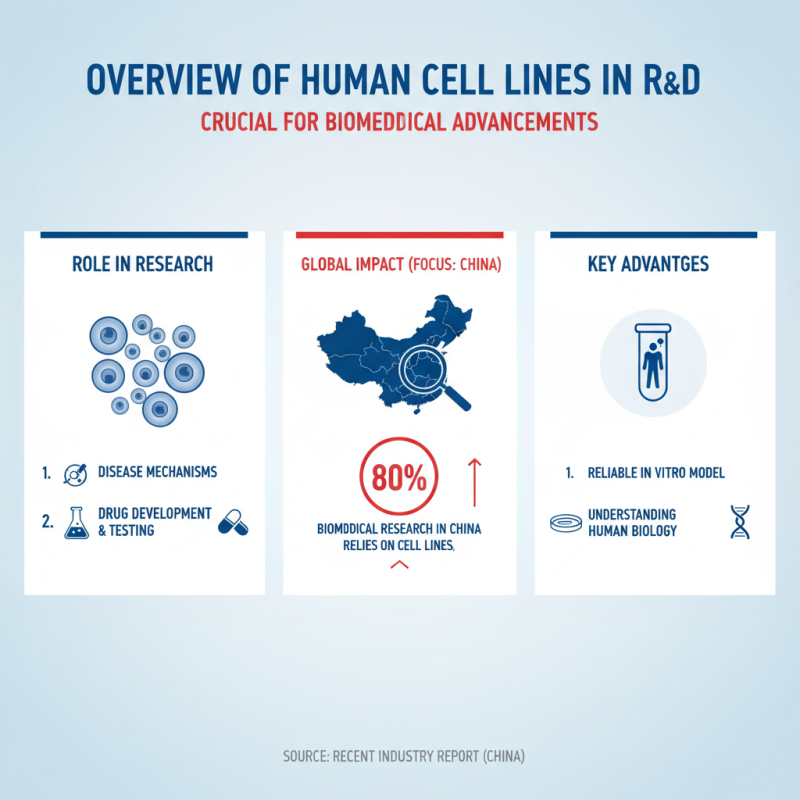
Overview of Human Cell Lines in Research and Development
Human cell lines play a crucial role in research and development, particularly in China. These cells are essential for studying disease mechanisms, drug development, and testing new therapies. According to a recent report, nearly 80% of biomedical research in China relies on human cell lines. They provide a reliable means to understand human biology in vitro.
Chinese researchers commonly use various cell lines for their studies. For instance, the HepG2 cell line is widely applied in liver disease research. Other notable lines include HeLa and A549, which are critical for cancer studies. The use of these cell lines has contributed significantly to advancements in personalized medicine. However, the choice of cell lines can sometimes lead to reproducibility issues in research findings.
Tips: When selecting a cell line, consider its genetic background and growth characteristics. Not all cell lines are suitable for every study. Researchers should also be cautious about potential contamination. Regularly review data to ensure accuracy and reliability. The growth rates and behavior of these cell lines can vary, impacting the outcomes of experiments. Always prioritize validation of results derived from cell lines in your research.
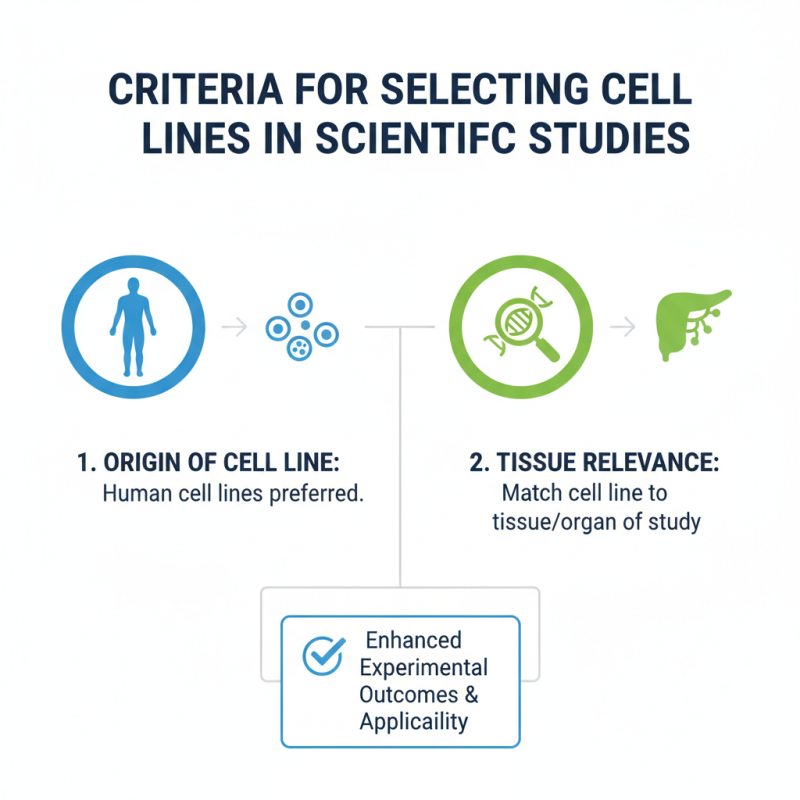
Criteria for Selecting Cell Lines in Scientific Studies
When selecting cell lines for research, several criteria come into play. The origin of the cell line is crucial. Researchers often choose human cell lines that closely resemble the tissues or organs they are studying. This relevance can enhance experimental outcomes and the applicability of the findings.
In addition to origin, growth characteristics are important. Some cell lines proliferate quickly while others are slow-growing. Fast-growing lines can expedite experiments but might not represent in vivo conditions accurately. Researchers must weigh efficiency against biological relevance.
**Tip:** Always validate your cell lines. Cross-check with current databases to avoid outdated or contaminated lines.
Next, consider the genetic stability of cell lines. Some lines may undergo mutations over time, leading to potential inconsistencies in results. It’s worth monitoring and characterizing cell lines before use.
**Tip:** Use multiple cell lines for comparative studies to address variability. This approach can reveal insights that single-line studies may overlook.
Overall, the selection process should be thorough and reflective. Choices made today influence future research paths. Be cautious when deciding which cell lines to adopt in your studies.
Top 10 Most Commonly Used Human Cell Lines in China
In China, human cell lines play a crucial role in research and development. Various cell lines are regularly used for drug discovery, cancer research, and genetic studies. According to recent reports, the most commonly used human cell lines include HEK293, HeLa, and Jurkat cells.
HEK293 cells are favored for their ease of transfection.
HeLa cells are essential for cancer research due to their resilient nature.
Jurkat cells are widely used in immunology. Their response to various stimuli provides insight into T-cell functions. Additionally, other cell lines like A549 and MCF-7 are gaining traction.
A549 cells are often utilized in studies related to lung cancer.
MCF-7 cells, on the other hand, are a staple in breast cancer research.
Despite their importance, researchers must remain cautious. Issues such as cross-contamination can skew results. Not all cell lines behave consistently over time, leading to potential discrepancies in experimental data. Ongoing evaluation of cell line authenticity is necessary to maintain research integrity. This is a challenge that requires attention from the scientific community.
Applications of Human Cell Lines in Drug Discovery and Testing
Human cell lines play a crucial role in drug discovery and testing. Researchers in China increasingly rely on these models for various applications. Cell lines help in understanding diseases, screening compounds, and predicting drug responses. For instance, the use of HepG2 cells in liver toxicity studies is well-documented. Reports indicate that 60% of new drugs fail due to safety concerns discovered late in development.
In recent years, the significance of patient-derived cell lines has risen. They provide a more representative model for testing. Data shows that these lines can mirror the genetic profiles of actual tumors, improving the relevance of results. However, challenges remain. Not all cell lines exhibit identical behavior to human tissues, leading to potential discrepancies.
Tips: When working with human cell lines, ensure accurate characterization. Regular validation against standard biomarkers is essential. Consider the ethical implications of using such models. Continuous reflection on the choice of cell lines can enhance research quality.
Challenges and Considerations in Using Human Cell Lines for Research
Using human cell lines in research presents unique challenges. One significant issue is genetic variability. Different cell lines may not represent the human population accurately. This can lead to misleading results. For example, one line may react well to a drug, while another does not. Such discrepancies can complicate research outcomes.
Another concern is the potential for contamination. Cross-contamination can alter the characteristics of cell lines. This misrepresentation can lead to erroneous data. Researchers must regularly verify their cell lines. Testing for mycoplasma and other contaminants is vital for preserving data integrity.
Ethical considerations loom large in human cell line usage. Obtaining consent for cell line development can be problematic. It raises questions about ownership and usage rights. This area needs careful navigation to avoid ethical pitfalls. Continued discussions in the scientific community are essential for addressing these concerns. Understanding the limitations and responsibilities is crucial for responsible research practices.
Top 10 Human Cell Lines Used in China for Research and Development
This bar chart illustrates the usage frequency of the top 10 human cell lines in research and development within China. HeLa cells are the most widely used, reflecting their importance in various research areas, followed by 293T and THP-1 cell lines. Understanding the utilization of these cell lines aids in comprehending their significance in biomedical research.