Top Recombinant Protein Suppliers for Global Buyers?

Choosing among the top recombinant protein suppliers requires more than comparing catalog prices. A reliable decision begins with the intended application, such as assay development, structural biology, diagnostics, or cell-based research. Each use demands different specifications. Purity, biological activity, expression host, endotoxin levels, buffer composition, and storage conditions can directly affect experimental results.

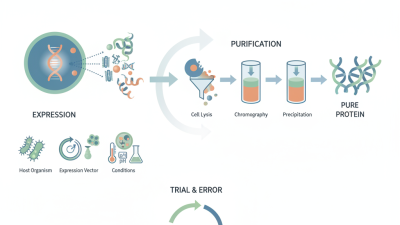
Frances Arnold, a Nobel Prize-winning protein-engineering scientist, said, “Let’s make evolution our design tool.” Her insight reflects the complexity of protein production. Suppliers may use bacterial, yeast, insect, or mammalian systems. These platforms can produce different folding patterns and post-translational modifications. A protein that looks suitable on paper may perform poorly in a sensitive assay. Small details matter. Check the datasheet carefully.

This guide compares important factors for global buyers, including quality documentation, batch consistency, technical support, customization, shipping controls, and regional availability. Certificates of analysis should match the actual product lot. Cold-chain packaging should protect the material through realistic transit delays. However, no ranking can fit every laboratory. Product availability changes. Published specifications may not reveal every limitation. That is worth admitting.

Experienced buyers should request representative data, clarify reconstitution procedures, and test a small quantity before larger purchasing decisions. They should also confirm whether the supplier supports the required research use and destination-market requirements. A lower price is not always lower cost. Failed experiments, repeated orders, and delayed projects can quickly outweigh the initial savings. This overview aims to support careful, evidence-based selection of recombinant protein suppliers for dependable global research workflows.

Top Recombinant Protein Suppliers for Global Buyers?

Recombinant Protein Types, Hosts, and Applications in Global Research

Global buyers increasingly compare recombinant proteins by biological performance, not catalog size. MarketsandMarkets’ 2024 industry report estimated the sector near US$2 billion in 2023, with growth toward roughly US$3 billion by 2028. Forecasts differ by scope, which deserves careful reading. Commercial research demand includes cytokines, growth factors, enzymes, antibodies, and antigens.

Escherichia coli often supports economical, rapid production of non-glycosylated proteins. Yeast can improve secretion and folding, while mammalian cells provide complex post-translational modifications. The host matters. Choice depends on disulfide bonds, glycosylation, aggregation risk, and intended use. Some proteins look pure yet lose activity after storage. That uncomfortable gap is easy to overlook.

In discovery research, recombinant proteins enable binding assays, pathway studies, cell-based screens, and structural work. In diagnostics, consistent antigen conformation can affect sensitivity and specificity. Therapeutic development demands identity, potency, sterility, endotoxin, host-cell protein, and residual DNA testing. Grand View Research’s 2024 analysis projected double-digit market growth through 2030, but regional access and regulatory requirements remain uneven. Buyers should request batch records, certificates, stability data, and application-specific validation. Price alone is a weak proxy.

Recombinant Protein Expression Hosts: Typical Operating Temperatures

The chart compares commonly used recombinant protein expression hosts by representative culture temperature. Bacterial and yeast systems are frequently selected for enzymes, antigens, and some cytokines, while insect and mammalian systems are preferred when complex folding, disulfide bonds, or post-translational modifications are important.

Temperatures are standard starting points used in research workflows and may be adjusted according to the construct, cell line, medium, and production objective. Applications include structural biology, diagnostics, vaccine research, bioprocess development, and therapeutic protein studies.

Supplier Quality Metrics: Purity ≥90%, Bioactivity, and Endotoxin ≤0.1 EU/µg

Top Recombinant Protein Suppliers for Global Buyers?

For global buyers, supplier quality starts with measurable evidence, not polished marketing. Purity should reach at least 90%, preferably supported by lot-specific analytical data. However, purity alone does not confirm usefulness. A highly purified protein may still show weak or inconsistent activity. Bioactivity testing should reflect the protein’s intended assay, concentration, and functional endpoint. Ask for representative assay curves, acceptance ranges, and storage conditions.

Endotoxin control is equally important for cell-based and in vivo research. A practical benchmark is no more than 0.1 EU/µg, measured with a validated method. Request the actual result, not only a compliance statement. Review the certificate of analysis, production lot, testing date, and retest policy. In supplier evaluations, small inconsistencies often appear between technical documents and delivered material. That gap deserves attention.

Tips: Compare at least three recent lots when possible. Check whether purity was measured by SDS-PAGE, HPLC, or both. Confirm bioactivity using your experimental system, because supplier assays may not match yours. Keep samples cold and limit freeze-thaw cycles. One imperfect point remains: even strong metrics cannot guarantee identical performance in every laboratory. A pilot order is wise. Reliability grows through documented results, responsive technical support, and transparent handling of deviations.

Global Supplier Comparison by Catalog Size, GMP Capacity, and Regional Reach

Top Recombinant Protein Suppliers for Global Buyers?

Global buyers should compare catalog size, GMP capacity, and regional reach together. A large catalog can still hide inconsistent documentation or limited lot availability. BioPlan’s 2024 biopharmaceutical manufacturing survey included more than 400 industry respondents. It identified capacity, supply continuity, and skilled staffing as persistent operational concerns. These findings matter when selecting recombinant proteins for regulated workflows.

Catalog size should be measured by usable specifications, not product-page totals. Check host systems, expression tags, purity grades, activity assays, and validated storage conditions. GMP capacity requires deeper evidence. Review quality agreements, batch records, change-control procedures, sterility testing, and audit access. Regional reach also affects risk. Local inventory can shorten customs delays, while qualified distributors may provide faster technical support. I have seen buyers overvalue a broad online catalog. That is an expensive assumption.

Tips: Build a comparison sheet with catalog entries, GMP status, lead time, minimum order quantity, and regional stock. Ask for recent certificate examples and representative lot data. Confirm whether “GMP-grade” means full GMP production or only quality-controlled testing. The distinction is easy to miss.

The 2024 IQVIA Institute report describes sustained growth in global biopharmaceutical research, increasing demand for reliable research materials. Supplier evaluations should therefore include scalability from discovery quantities to clinical manufacturing support. However, regional coverage is not always equal. A supplier may serve many countries but lack local technical personnel. Verify response times, import documentation, and temperature-monitoring procedures before approval.

Buyer Verification Standards: ISO 9001, GMP, CoA, and Lot Consistency

Top Recombinant Protein Suppliers for Global Buyers?

Reliable supplier evaluation begins with verifiable quality systems, not attractive product pages. Ask for the ISO 9001 certificate and confirm its scope, issuing body, and expiry date. The certificate should cover the actual manufacturing or quality site. A trading office alone is insufficient. For products used in regulated research, GMP controls provide stronger evidence of documented production, trained personnel, and controlled deviations. GMP is not a decorative logo.

A current Certificate of Analysis should match the exact product and lot number. Check identity, purity, concentration, endotoxin results, appearance, storage conditions, and test methods. Request acceptance limits, not only reported values. Independent laboratory data can add confidence when the application is sensitive. Yet, a perfect CoA still needs context. Buyers should ask whether results come from validated methods and whether raw data can be reviewed under appropriate confidentiality terms.

Lot consistency deserves practical attention. Compare several recent lots, especially purity, activity, concentration, and reconstitution behavior. Small shifts may affect experiments before they become obvious. Keep samples from earlier lots when possible. This creates a useful internal reference. I have found that supplier responses reveal as much as their documents. Clear answers suggest mature quality management. Delayed replies are not automatic proof of poor quality, but they deserve follow-up. No review is flawless. Even experienced buyers can overvalue certificates and overlook transport conditions, packaging integrity, or change-control records. Reliable purchasing depends on documented evidence, direct questions, and repeatable checks.

Pricing, Lead Times, Cold-Chain Logistics, and Regulatory Data for Importers

Top Recombinant Protein Suppliers for Global Buyers?

Importers should compare more than catalog prices when sourcing recombinant proteins. A lower quote may exclude export packaging, customs documents, or temperature monitoring. Request a lot-specific certificate of analysis, purity results, activity data, and storage conditions. Also check whether the quoted price includes refrigerated or frozen shipping. Small fees can change the landed cost.

Lead times deserve close attention. Standard stock may ship within days, while customized expression can require several weeks. Ask for a realistic production window, not an optimistic estimate. Confirm dispatch dates, carrier experience, and contingency plans for delays. Cold-chain logistics should include validated packaging, temperature indicators, and clear instructions for receiving damaged shipments. Keep the shipment cold.

Regulatory data can determine whether an import clears smoothly. Suppliers should provide batch traceability, safety documentation, country-of-origin details, and suitable commercial invoices. Importers may also need product classifications, permits, or local registration records. Requirements vary by destination and intended research use, so independent verification remains necessary. Do not rely on a sales sheet alone. In practice, even experienced buyers sometimes overlook document mismatches between the purchase order and shipping paperwork. That mistake is preventable, but not always. Compare technical quality, delivery reliability, documentation, and total landed cost before approving a supplier.

Top Recombinant Protein Suppliers for Global Buyers? – Pricing, Lead Times, Cold-Chain Logistics, and Regulatory Data for Importers

Supplier Category Typical Product Scope Indicative Price Range
USD per mg
Typical Lead Time Cold-Chain Logistics Common Quality & Documentation Package Import & Regulatory Considerations Typical MOQ Best Fit for Buyers
Research-Grade Catalog Supplier Frequently used recombinant cytokines, growth factors, enzymes, antigens, and binding proteins for laboratory research. $80–$600
Small research pack, commonly 10–100 µg.
In-stock: 3–10 business days
Made-to-order: 3–8 weeks
2–8°C or −20°C
Dry ice may be required for frozen shipments; temperature-sensitive products should use validated packaging.
Certificate of Analysis, SDS, lot number, purity data, concentration, buffer composition, and recommended storage conditions. Usually imported as research-use material. The buyer should verify HS classification, destination-country labeling, customs requirements, and whether permits apply to the product or host-cell materials. 1–10 vials Universities, laboratories, assay development, and early feasibility studies.
Custom Expression & Purification Provider Customer-designed proteins, Fc-fusions, tagged proteins, difficult-to-express targets, and tailored buffer formulations. $150–$1,500
Indicative small-scale custom production; complexity can materially increase cost.
Feasibility: 2–6 weeks
Production: 6–16 weeks
2–8°C or −20°C
Shipment conditions depend on formulation, stability data, and requested presentation.
Project protocol, sequence confirmation, expression report, purification profile, SDS-PAGE or equivalent purity data, endotoxin result where applicable, and CoA. Importers should define the intended use, animal-origin materials, genetically modified production system, and any destination-country biosafety or documentation requirements before purchase. 0.5–10 mg per project Preclinical research, assay optimization, and targets not available from standard catalogs.
GMP-Oriented Development Supplier Recombinant proteins intended for process development, analytical standards, formulation work, or regulated preclinical programs. $1,000–$8,000
Indicative 10–100 mg development quantities.
8–24 weeks Validated 2–8°C
Frozen shipping may be used when stability data support it; temperature monitoring is normally expected.
Expanded CoA, batch records or summaries, identity and purity testing, bioburden or endotoxin information where relevant, change-control information, and quality agreement options. GMP status is not automatically equivalent to regulatory approval. Buyers should confirm intended use, quality system scope, audit rights, release criteria, and country-specific import documentation. 10–100 mg Biotechnology companies, regulated assay development, and preclinical manufacturing programs.
Clinical-Grade / GMP Manufacturing Partner Higher-volume recombinant proteins for clinical development, formulation, comparability, and potential commercial manufacturing. $5,000–$50,000+
Project-based pricing; cost depends on scale, process complexity, testing, and release requirements.
16–40 weeks
Longer for technology transfer or process validation
Validated 2–8°C or frozen
Qualified shippers, calibrated data loggers, excursion procedures, and documented chain of custody are commonly required.
GMP batch documentation, validated or qualified analytical methods, release testing, stability program, deviation and change-control process, quality agreement, and audit support. Regulatory strategy should be agreed before manufacture. Depending on use and jurisdiction, the importer may need a responsible local entity, manufacturing-site information, product specifications, and health-authority submissions. 100 mg to multi-gram scale Clinical programs, regulated biologics development, and commercial supply planning.
Low-Cost Regional Production Supplier Common research proteins, enzymes, antigens, and routine recombinant targets with cost-focused production models. $40–$350
Indicative small research packs; specification and testing depth may vary.
In-stock: 5–15 business days
Custom: 6–14 weeks
Condition-specific
Confirm whether the shipment is ambient, refrigerated, or frozen and request documented temperature limits before ordering.
CoA and SDS are commonly available. Additional information such as endotoxin, host-cell protein, residual DNA, or stability data should be requested when relevant. Lower price does not remove import obligations. Verify product identity, declared value, country of origin, Incoterms, customs classification, and any biological-material restrictions. 1–20 vials Routine research purchasing where budget and basic documentation are the main priorities.
Specialty Stability-Focused Supplier Proteins requiring optimized formulation, high stability, low endotoxin, long-term storage, or specialized presentation. $250–$2,500
Higher cost reflects formulation studies, additional testing, or difficult stability profiles.
4–14 weeks Validated frozen or refrigerated
Product-specific shipping instructions, maximum allowable transit time, and excursion assessment should be documented.
Stability or stress data, concentration and purity results, endotoxin data where applicable, formulation details, freeze-thaw guidance, and storage-life information. Importers should confirm whether the material contains preservatives, animal-derived components, hazardous substances, or genetically modified production intermediates that trigger additional controls. 1–100 mg Global distribution, long transit routes, screening platforms, and applications with strict handling requirements.
Bulk Scale-Up Supplier Multi-gram recombinant proteins, enzymes, and process materials for manufacturing support, formulation, or high-throughput use. $20–$300
Indicative unit economics per mg at larger scale; total project value is usually quoted separately.
12–32 weeks Qualified bulk cold chain
Packaging configuration, palletization, temperature mapping, data logging, and contingency planning should be agreed in the supply contract.
Lot-release specification, batch documentation, analytical methods, stability data, raw-material statements, traceability records, and supply-continuity information. Confirm whether the material is research-use, process-use, or intended for a regulated product. Import licenses, customs declarations, and local quality-release responsibilities may differ by use case. 1–100 g+ Manufacturers, large-scale assay platforms, and buyers seeking lower cost per unit.
Buyer note: Price and lead-time figures are indicative international procurement ranges rather than quotations from named companies. Actual pricing depends on protein sequence, expression host, purity, endotoxin limit, formulation, testing package, quantity, Incoterms, destination, and shipping conditions. Importers should request a current quotation, product-specific CoA, SDS, temperature requirements, packaging qualification, and destination-country regulatory documents before placing an order.