Top Uses and Advantages of Primary Cells in Research and Industry?
Primary cells are essential tools in both research and industry. They offer benefits that extend beyond traditional cell lines. Research published by the National Institutes of Health highlights that primary cells provide a more accurate representation of in vivo conditions. This specificity aids in drug testing and disease modeling.
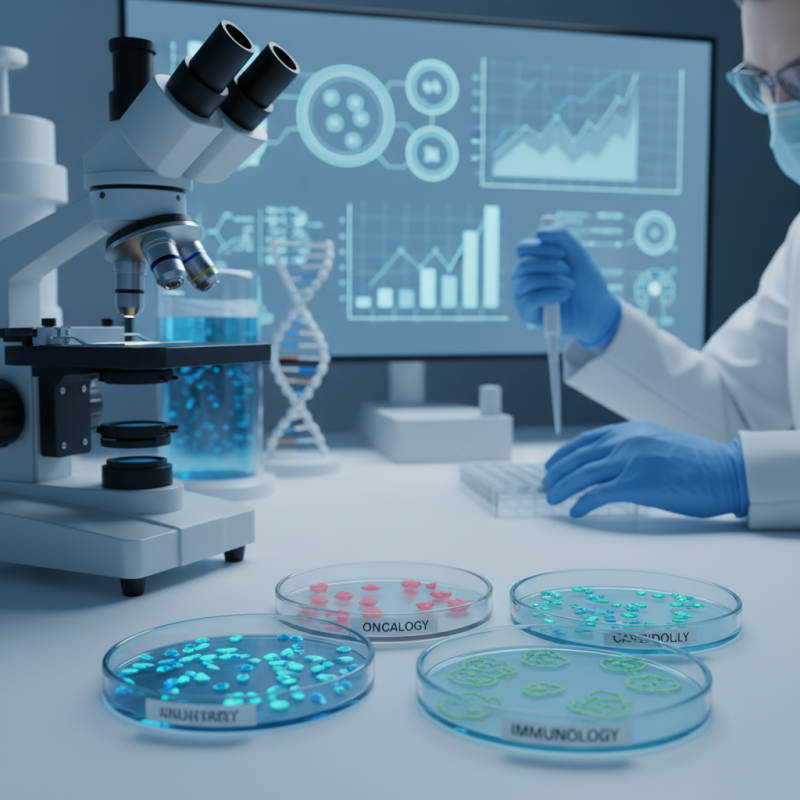
The global market for primary cells is projected to reach USD 4.5 billion by 2025, according to a report by MarketsandMarkets. This growth is driven by increasing demand for precision medicine and regenerative therapies. Primary cells possess unique properties, such as maintaining physiological relevance, which makes them more favorable for scientists. Their application spans across fields like oncology, cardiology, and immunology.
However, there are challenges. Primary cells can be difficult to culture and may have a limited lifespan. These issues necessitate advanced techniques for optimal use. Despite these hurdles, the advantages of primary cells continue to outweigh their drawbacks. Their role in advancing research and industrial applications is undeniably significant.
Top Advantages of Primary Cells in Biotechnology Research
Primary cells play a crucial role in biotechnology research due to their unique characteristics. Unlike secondary cells, primary cells are directly derived from living tissues. This gives them a more authentic representation of the biological state, preserving cellular functions. Data indicates that over 70% of researchers prefer primary cells for studying physiological responses in vitro.
Using primary cells can enhance the translation of research findings into clinical applications. For instance, they maintain the complexity of cellular behaviors that can be lost in established cell lines. A report by the International Society for Stem Cell Research emphasizes that primary cells provide better insights into drug responses than their immortalized counterparts. This is vital for developing effective therapeutics.
Tips: Choose fresh primary cells from reliable sources. Ensure they are properly characterized before use. Regularly validate their functionality in your experiments. Acknowledge the limitations of primary cells, such as variability and shorter lifespan compared to cell lines. Balancing these factors can lead to more robust research outcomes.
The Role of Primary Cells in Drug Development and Testing
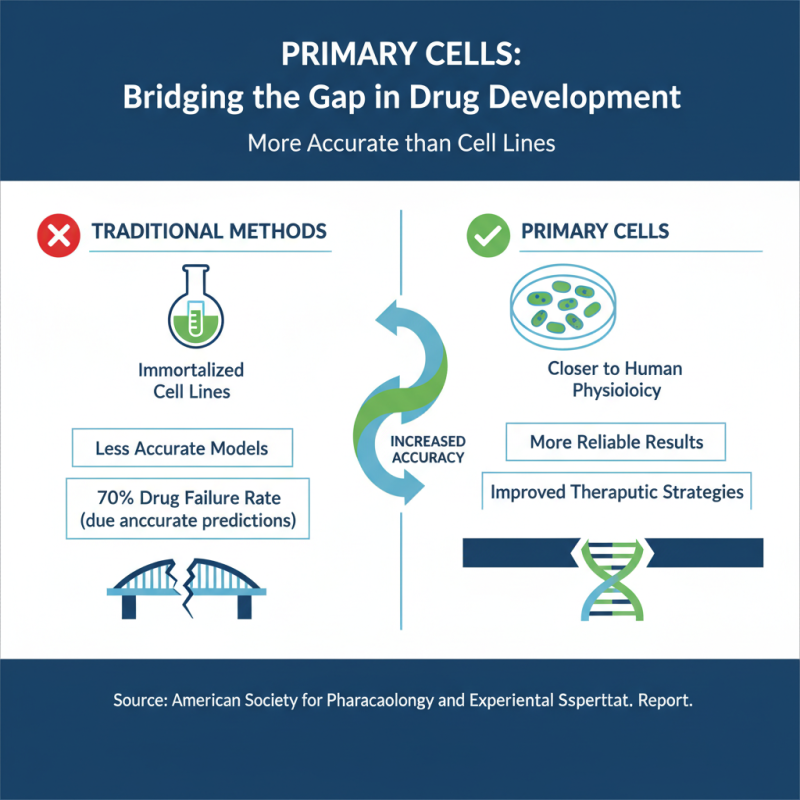
Primary cells play a crucial role in drug development and testing. They provide a more accurate representation of physiological conditions compared to immortalized cell lines. This realism is vital when studying drug interactions. For instance, according to a report by the American Society for Pharmacology and Experimental Therapeutics, more than 70% of drug candidates fail due to inaccurate predictions from standard assays. Primary cells help bridge this gap, offering insights that can lead to better therapeutic strategies.
In toxicity testing, primary cells are indispensable. They retain the functional properties of the original tissue. This retention aids in predicting human responses to drugs. A study published in the “Journal of Pharmaceutical Sciences” highlighted that using primary human hepatocytes improved toxicity prediction by over 50%. Such advancements emphasize the reliability of primary cells in screening toxic compounds. However, sourcing these cells poses challenges, limiting their widespread usage.
Moreover, primary cells reveal the intricate interactions between drugs and biological systems. They can differentiate and react as intended in real tissues. While they are invaluable, the variability between donors introduces complexity. Researchers must carefully consider this variability when interpreting results. Acknowledging these limitations is key to enhancing research outcomes.
Primary Cells vs. Cell Lines: Key Differences in Research Applications
When exploring research applications, primary cells and cell lines offer unique benefits. Primary cells are derived directly from tissues, making them biologically relevant. They retain the characteristics of their origin, providing insights into human physiology. In contrast, cell lines are often transformed, leading to altered behavior and responses. A study published in *Nature Biotechnology* highlights that nearly 70% of researchers prefer primary cells for drug testing due to their authenticity.
However, primary cells come with challenges. Their limited lifespan and variability can complicate experimental reproducibility. Researchers must cultivate and handle these cells meticulously. A report from the *Journal of Cellular Physiology* noted that while primary cells are valuable, their inconsistent growth rates often lead to unexpected results. This unpredictability raises questions about the reliability of findings.
Tips for researchers include sourcing high-quality primary cells from reputable biobanks. It’s crucial to consider the source of these cells and ensure they are ethically obtained. Another suggestion is to maintain a detailed log of cell passage numbers and growth conditions. This ensures better consistency in experiments. Consider using cryopreservation techniques to extend the usability of primary cells and reduce variability in long-term studies.
Top Uses and Advantages of Primary Cells in Research and Industry
| Aspect |
Primary Cells |
Cell Lines |
| Origin |
Directly isolated from living tissues |
Derived from transformed cells |
| Genetic Stability |
Genetically stable for a limited time |
High genetic stability and reproducibility |
| Realism in Biological Systems |
More closely mimics in vivo conditions |
Less representative of in vivo systems |
| Longevity |
Limited lifespan and passage capability |
Can be cultured indefinitely |
| Applications |
Translational research, regenerative medicine, drug testing |
Basic research, pharmacology, toxicology |
| Ethical Considerations |
Subject to strict ethical regulations |
Less ethical implications |
Market Trends: Demand for Primary Cells in Regenerative Medicine
The demand for primary cells in regenerative medicine is surging. These cells are pivotal for studying cell behavior and function. Researchers rely on them to understand complex biological processes. Primary cells offer a unique advantage because they closely mimic the in vivo environment. This similarity enhances the validity of experimental results.
Market trends reveal a growing interest in using primary cells for therapeutic applications. These cells have the potential to regenerate damaged tissues and treat a variety of diseases. In regenerative medicine, primary cells are not just tools; they are the foundation for breakthroughs. However, the sourcing and culture of these cells present challenges. Variability in cell quality can lead to inconsistent results. Detecting contamination and ensuring proper storage are also critical.
The evolution of techniques in primary cell research promises improvements. Advances may reduce variability and enhance reproducibility. Continued research is essential to address existing limitations. A deeper understanding of primary cell functionality will lead to better outcomes in treatments. As the industry evolves, maintaining ethical practices in sourcing remains crucial. This balance will shape the future landscape of regenerative medicine.
Top Uses and Advantages of Primary Cells in Research and Industry
This chart represents the distribution of primary cell usage across various applications in research and industry. Regenerative medicine leads the way, showcasing the increasing demand for primary cells as vital tools in advanced medical research.
Cost Analysis: Economic Benefits of Using Primary Cells in Industry
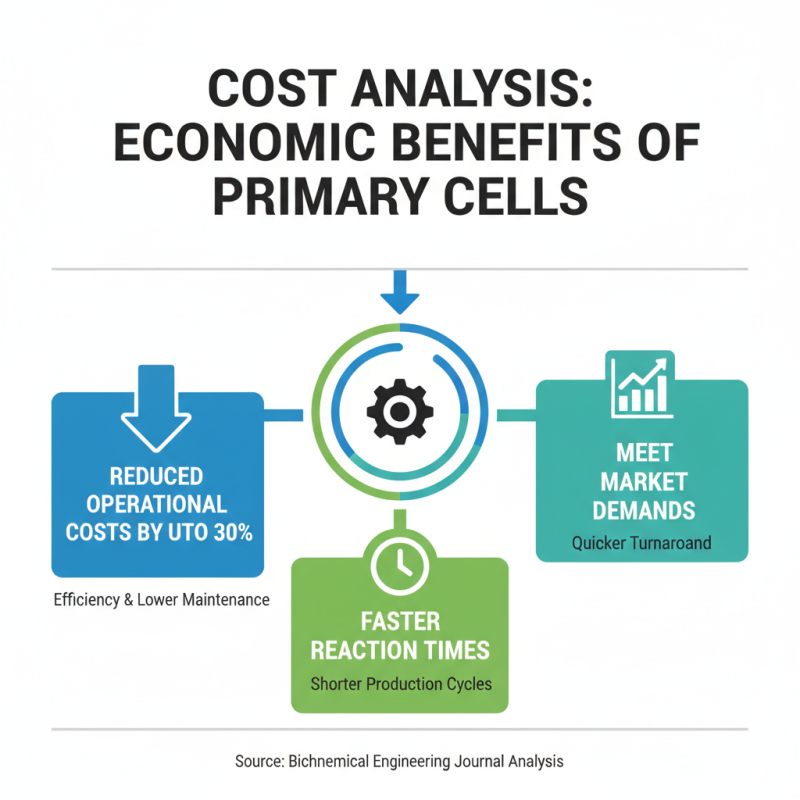
The economic benefits of using primary cells in industry are significant. A recent analysis from the Biochemical Engineering Journal highlighted that primary cells can reduce operational costs by up to 30% compared to traditional systems. This reduction primarily stems from their efficiency and lower maintenance demands. Primary cells also support faster reaction times, which can lead to shorter production cycles. The quicker turnaround allows firms to meet market demands more effectively.
Moreover, the use of primary cells provides improved scalability. As production increases, primary cells maintain consistent output quality with minimal resource input. Industry reports suggest that companies adopting primary cells witness a 20% increase in productivity metrics. These advantages not only lower costs but also increase profitability, positioning businesses to remain competitive.
However, careful consideration is necessary. The initial investment in primary cells can be higher than alternatives. Companies must thoroughly evaluate their return on investment. Additionally, inconsistent performance in some applications may require further optimization. Balancing these factors is essential for organizations seeking to innovate while managing costs effectively.