2026 Top Human AB Serum Suppliers for Global Buyers
Choosing reliable human AB serum suppliers in 2026 requires more than comparing prices. Global buyers need evidence of quality, stable supply, and responsible sourcing. Human AB serum supports cell culture, bioprocess development, diagnostic research, and other laboratory applications. Its performance can affect cell growth, assay consistency, and project timelines.
This guide introduces leading suppliers serving international research and manufacturing teams. It examines donor screening, collection procedures, traceability, filtration options, packaging, and cold-chain handling. Buyers should review certificates of analysis, lot-specific data, and documented quality systems. Clear technical support also matters when laboratories evaluate a new lot or investigate unexpected results. A supplier’s reputation helps, but verified documentation remains essential.
No supplier is perfect. Batch variation can still occur. Storage errors may happen during transit. Product descriptions may also leave important questions unanswered. Experienced buyers should request samples, confirm import requirements, and clarify replacement policies before placing large orders. They should also check whether the product fits their intended application, scale, and internal validation process. Regulatory expectations differ across regions, so local compliance review is necessary.
The suppliers discussed here are assessed through practical purchasing criteria, public quality information, industry experience, and buyer-focused considerations. This approach does not treat a ranking as permanent. Supply conditions change. New evidence may change the decision. The strongest choice is usually the supplier that combines dependable quality, transparent communication, and realistic delivery performance.
Definition and Uses of Human AB Serum
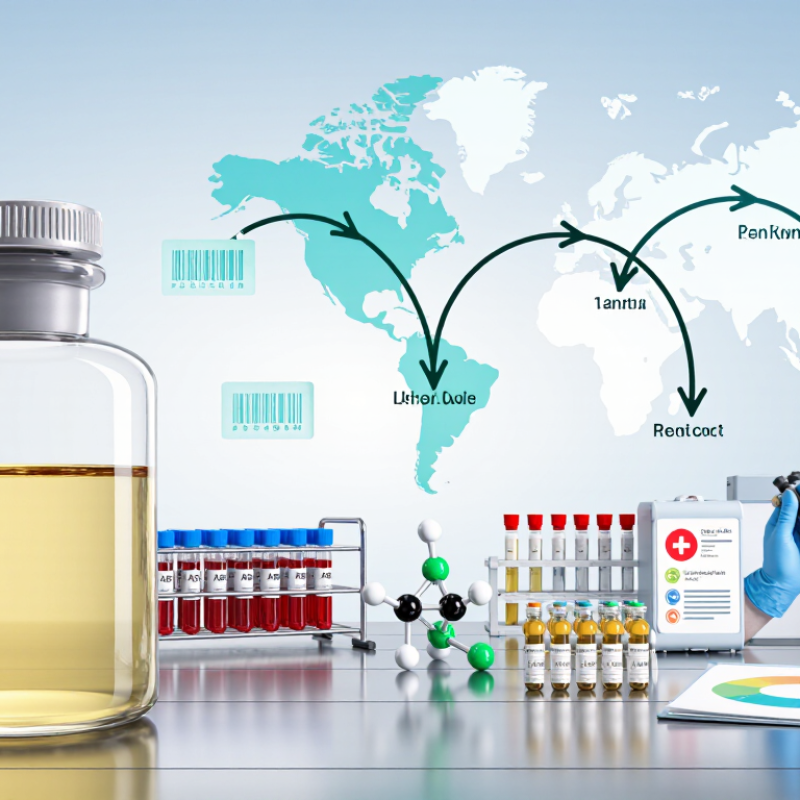
Human AB serum is the liquid portion of human blood remaining after clotting. It contains proteins, hormones, lipids, growth factors, and other nutrients. Unlike many other blood groups, AB serum generally lacks anti-A and anti-B antibodies. This feature can reduce antibody-related interference in cell culture. However, it does not make every serum batch biologically identical.
Laboratories use human AB serum to support primary cell expansion, immune-cell studies, stem-cell workflows, and assay development. Researchers may also use it when animal-derived supplements create experimental concerns. The 2024 Grand View Research report estimated the global cell culture media market at about USD 4.6 billion in 2023. That growth reflects rising demand for consistent, well-characterized culture components. Serum remains useful, but it is not a universal solution.
Quality depends on donor screening, pooling strategy, filtration, storage, and traceability. The World Health Organization reported approximately 118.5 million blood donations worldwide in 2019, with collection levels varying sharply between regions. This difference can affect long-term supply planning for international buyers. Buyers should review antibody testing, pathogen screening, endotoxin levels, hemolysis, and lot-to-lot performance. A certificate alone may not reveal practical variability.
In my experience, small differences in cell morphology can appear after a supplier change. That detail deserves more attention. Temperature records and controlled thawing also matter, because repeated freeze-thaw cycles may reduce performance. Celsius is not a minor detail.
Key Criteria for Evaluating Human AB Serum Suppliers
2026 Top Human AB Serum Suppliers for Global Buyers
Selecting a human AB serum supplier requires more than comparing prices. Start with source transparency, donor screening, and complete traceability for every lot. Reliable suppliers should explain collection regions, processing conditions, storage temperatures, and expiration controls. Ask for certificates of analysis, microbial testing results, endotoxin data, and viral screening records. These documents should match the exact lot you plan to purchase.
Quality systems matter greatly. Check whether the supplier follows documented manufacturing procedures and maintains controlled facilities. Review their change-control process, complaint handling, and records for batch-to-batch consistency. A supplier may provide attractive samples, yet commercial lots can perform differently. Request evaluation samples before placing a large order. Test them in your own cell culture workflow, since serum performance depends on cell type and protocol. Pricing alone is a weak filter.
Tips: Confirm cold-chain capability before shipment. Ask how temperature excursions are recorded. Check packaging, aliquot sizes, lead times, and replacement policies. Verify export documents for your destination. A polished certificate is not proof of every detail. I would also ask difficult questions about failed lots and corrective actions. Some suppliers may answer slowly, but vague answers deserve careful review. Keep written records of all commitments.
2026 Top Human AB Serum Suppliers for Global Buyers
Key Criteria for Evaluating Human AB Serum Suppliers
The chart presents a suggested buyer-evaluation framework rather than supplier performance data. Quality and safety verification should prioritize traceability, donor-screening documentation, product consistency, regulatory compliance, cold-chain integrity, and technical support. Human AB serum is commonly selected for cell-culture applications because it does not contain detectable anti-A or anti-B antibodies in the same way as serum from other ABO groups; buyers should still confirm the supplier’s product-specific specifications and certificates of analysis.
2026 Comparison of Leading Global Human AB Serum Suppliers
In 2026, global buyers are comparing human AB serum suppliers through more than price. Product consistency, traceability, and technical support now influence purchasing decisions. Experienced buyers often review donor-screening procedures, collection methods, processing controls, and storage conditions before requesting quotations. Clear documentation matters.
Leading suppliers differ in how they manage quality. Some provide detailed certificates of analysis, lot-specific testing, and transparent release criteria. Others offer stronger customization, including filtered or heat-treated options. Buyers should examine viral marker testing, sterility controls, endotoxin data, and residual anticoagulant information. Cold-chain performance also deserves close attention. A damaged shipment can erase an attractive unit price.
Regional service creates another difference. Reliable suppliers explain import documents, packaging standards, temperature monitoring, and realistic delivery times. Their technical teams should answer specific questions without vague promises. Regulatory familiarity is valuable, but requirements still vary between countries and applications. No supplier is perfect. I would not choose a vendor from a polished catalog alone. A small pilot order, followed by side-by-side performance testing, may reveal differences in cell growth, background activity, and lot stability. Buyers should also assess communication during problems, not only during sales. That part is often overlooked.
2026 Top Human AB Serum Suppliers for Global Buyers - 2026 Comparison of Leading Global Human AB Serum Suppliers
| Supplier Category | Primary Source | AB Serum Formats | Typical Processing | Quality Documentation | Common Pack Sizes | Typical Storage | Best Fit for Global Buyers |
|---|---|---|---|---|---|---|---|
| GMP-oriented bioprocessing supplier | Screened human plasma collected through regulated donation systems | Standard AB serum, heat-inactivated serum, charcoal-treated serum, dialyzed serum | Sterile filtration; optional heat inactivation; lot blending may be available | Certificate of analysis, donor-screening statement, sterility result, endotoxin result, safety data sheet | 50 mL, 100 mL, 500 mL, 1 L | Frozen, commonly at approximately −20°C or colder; follow the product specification | Research, cell culture, assay development, and regulated bioprocess workflows |
| Blood-bank-derived serum supplier | Human AB plasma or serum collected from qualified blood-donation networks | Pooled AB serum, individual-donor serum, heat-inactivated serum | Clotting and centrifugation, filtration, optional pooling, and cold-chain handling | Donor eligibility information, infectious-disease testing summary, lot-specific analysis | 10 mL, 50 mL, 100 mL, 500 mL | Frozen shipment with dry ice or validated frozen packaging | Buyers requiring traceable human-origin material and donor-related documentation |
| Specialty life-science reagent supplier | Qualified human plasma or serum sourced from approved collection partners | Research-grade AB serum, dialyzed serum, low-endotoxin serum, custom-treated serum | Sterile filtration and optional treatment for endotoxin reduction or nutrient adjustment | Certificate of analysis, product specification, sterility and endotoxin data, technical support documents | 10 mL, 50 mL, 100 mL, 500 mL, 1 L | Usually stored and shipped frozen; repeated freeze-thaw cycles should be minimized | Universities, biotechnology laboratories, diagnostic research, and small-to-medium projects |
| Custom sourcing and pooling supplier | Client-defined donor profile, regional collection pool, or approved third-party material | Custom pooled AB serum, single-donor serum, matched or screened serum | Custom donor screening, pooling, filtration, treatment, aliquoting, and labeling | Customized certificate of analysis, traceability package, donor criteria, and shipping records | Project-dependent; from research vials to bulk containers | Validated frozen storage and temperature-controlled international transport | Clinical research, assay validation, specialized cell models, and large-volume programs |
| Regional laboratory distributor | Imported or locally stocked serum manufactured by qualified upstream producers | Common research-grade AB serum and heat-inactivated AB serum | Typically supplied as received; local cold storage and order consolidation may be provided | Manufacturer certificate of analysis, safety data sheet, import and lot records where applicable | 50 mL, 100 mL, 500 mL | Frozen storage with cold-chain delivery requirements | Buyers prioritizing local availability, consolidated procurement, and regional technical support |
| Bulk-volume serum manufacturer | Large qualified plasma pools from screened human donors | Bulk AB serum, pooled serum, heat-inactivated bulk serum, custom aliquots | Controlled pooling, clarification, sterile filtration, filling, and batch release testing | Batch records, certificate of analysis, traceability documentation, sterility and endotoxin testing | 500 mL, 1 L, 5 L, or project-specific bulk formats | Frozen warehousing and validated temperature-controlled logistics | High-throughput cell culture, manufacturing support, and recurring institutional procurement |
Note: Product specifications, donor screening panels, testing methods, pack sizes, storage conditions, and regulatory documentation vary by lot and supplier category. Global buyers should verify the current certificate of analysis, country-of-origin requirements, import permits, cold-chain conditions, and intended-use suitability before purchase.
Quality Standards, Certifications, and Supply Chain Practices
2026 Top Human AB Serum Suppliers for Global Buyers
Quality begins with traceability, not attractive packaging. The World Health Organization’s Global Status Report on Blood Safety and Availability 2021 recorded 118.5 million blood donations worldwide in 2018. This scale shows why donor selection, consent records, testing, and lot segregation require documented controls. Buyers should request certificates of analysis, donor-screening summaries, country-of-origin details, and storage-temperature records for every lot.
Look for suppliers operating under ISO 9001 quality systems and, where relevant, ISO 20387 biobanking principles. ISO 20387 emphasizes competent personnel, validated processes, and traceable biological materials. The ISO Survey 2023 reported more than 1.2 million ISO 9001 certificates globally, but certification alone proves little. Audit scope matters. Ask whether it covers collection, processing, freezing, and distribution.
Cold-chain performance deserves direct evidence. Require continuous temperature logs, calibrated data loggers, tamper-evident packaging, and documented excursion procedures. Confirm that containers arrive frozen, intact, and labeled with lot numbers. Human AB serum can vary in complement activity, hemolysis, and matrix effects. A clear specification should define those limits.
Some supplier documentation remains incomplete. That is a practical warning. Independent testing, periodic supplier audits, and retained samples can reduce uncertainty. Global buyers should also review import requirements, customs documentation, and local rules for human-derived research materials before ordering.
Ordering, Storage, and Import Considerations for Global Buyers
2026 Top Human AB Serum Suppliers for Global Buyers
Ordering human AB serum requires more than comparing prices. A 2024 industry market assessment estimates the global human serum market will grow at over 8% annually through 2030. Demand is rising, but documentation quality remains uneven.
Request the donor profile, collection date, processing method, lot number, sterility statement, and certificate of analysis. Confirm whether the serum is filtered, heat-inactivated, pooled, or single-donor. Small wording differences can change experimental performance.
I would also order a pilot lot before committing to annual volume. That step feels slow. It prevents expensive surprises.
Storage conditions should match validated supplier instructions, not habit. Many products require −20°C or −80°C storage, with minimal freeze-thaw cycles.
The WHO Laboratory Biosafety Manual, fourth edition, stresses risk-based handling, traceability, and controlled procedures.
Record freezer temperature continuously, retain shipment logger data, and inspect vials for cracks or thawing.
For transport, IATA’s 2025 Dangerous Goods Regulations require classification based on material and risk. Human serum may follow different shipping rules depending on testing, origin, and pathogen status.
Importers should verify permits, customs codes, commercial invoices, packaging, and destination-country requirements before dispatch. UN Model Regulations and local customs guidance should be checked together.
A broker helps, but responsibility still sits with the importer.
My weak point is assuming paperwork is universal; it is not. A missing declaration can delay clearance while the cold chain quietly fails.
Related Posts
-
Top Molecular Biology Techniques for Modern Research and Applications?
-

2026 Top Mycoplasma Detection Techniques for Global Buyers?
-
How to Choose the Best Sanger Sequencing Reagents for Your Needs?
-
How to Choose the Best Transfection Reagents for Your Experiments?
-

Top 10 Cell Culture Products for Global Buyers
-

Why Are Recombinant Proteins Important for Biotechnology and Medicine?