How to Identify Host Cell Protein in Biopharmaceuticals?
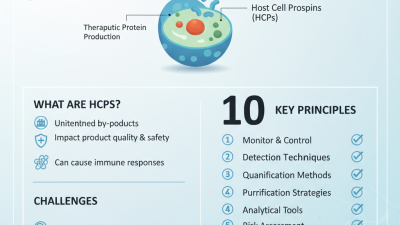
Host cell proteins (HCPs) present a significant challenge in biopharmaceutical development. These impurities can adversely affect drug safety and efficacy. According to industry reports, nearly 50% of therapeutic proteins contain HCPs, highlighting the necessity for rigorous identification methods. Detecting HCPs ensures that biologics meet safety standards and regulatory requirements.
Advanced techniques, such as mass spectrometry and enzyme-linked immunosorbent assays, are employed to characterize HCPs. These methods enhance sensitivity and specificity, allowing for accurate identification. However, variability in HCP profiles across production batches may lead to inconsistent results. This inconsistency underscores the need for continuous improvement in analytical methodologies.
Addressing HCP concerns is crucial for successful biopharmaceutical products. While regulatory bodies, such as the FDA and EMA, have established guidelines, many companies still struggle with HCP determination. Incomplete understanding of HCP implications can lead to costly delays in drug development. A deeper investigation into removal strategies and detection processes is essential to mitigate risks. The ongoing challenge of HCP identification emphasizes the need for enhanced analytical expertise and collaborative efforts in the biopharmaceutical sector.

Overview of Host Cell Proteins in Biopharmaceuticals
Host cell proteins (HCPs) are a significant concern in biopharmaceutical production. These proteins are derived from the host cells used during the manufacturing process. They can lead to immunogenic responses and affect drug safety and efficacy. According to a report by the BioPhorum Operations Group, over 95% of biopharmaceuticals contain HCPs. This underscores the need for thorough identification and quantification methods to ensure product quality.
Identifying HCPs involves various techniques, including immunoassays and mass spectrometry. The Biopharmaceutical Report 2022 highlighted that mass spectrometry has become a dominant tool for profiling HCPs. It offers high sensitivity and specificity, helping to detect low-abundance proteins. Additionally, the importance of comprehensive analyses cannot be overstated. Variability in production can introduce unexpected HCPs, leading to potential challenges in drug development.
However, many researchers face challenges in optimizing these identification processes. The effectiveness of assays can vary based on the complexity of the sample matrix and the types of HCPs present. Identifying all potential HCPs remains an ongoing struggle. A follow-up study could provide deeper insights into emerging technologies that potentially improve HCP detection and characterization. Consistent advancements in this area are critical for ensuring biopharmaceutical safety and effectiveness.
How to Identify Host Cell Protein in Biopharmaceuticals?
| Host Cell Protein Type |
Detection Method |
Sensitivity |
Common Applications |
| Recombinant Proteins |
ELISA |
High |
Therapeutic antibody development |
| DNA Binding Proteins |
Western Blotting |
Medium |
Gene therapy products |
| Enzymes |
Mass Spectrometry |
Very High |
Vaccine formulation |
| IgG Contaminants |
RNA Sequencing |
High |
Antibody purification |
| glycosylated Proteins |
Glycoanalysis |
Medium |
Biopharmaceutical characterization |
Methods for Detecting Host Cell Proteins
Detecting host cell proteins (HCPs) in biopharmaceuticals is a vital aspect of quality control. Various methods exist, each with unique advantages and limitations. One common approach is enzyme-linked immunosorbent assay (ELISA), which enables sensitive detection of specific proteins. Studies indicate that ELISA can identify HCP levels as low as 1-10 ng/mL, making it a reliable choice for manufacturers. However, potential false positives can arise from cross-reactivity, which requires careful validation.
Another promising method is mass spectrometry. This technique offers higher specificity and sensitivity compared to ELISA. A report by BioPharma Insight suggests that mass spectrometry can differentiate between closely related protein isoforms. Furthermore, it can identify HCPs without pre-existing antibodies, which is particularly beneficial when the protein is novel. Nonetheless, the complexity and cost associated with mass spectrometry can be prohibitive for some labs.
Additionally, high-performance liquid chromatography (HPLC) is commonly used. HPLC separates proteins based on their size and charge. While effective, it may miss low-abundance HCPs due to its reliance on separation techniques. A recent analysis found that up to 30% of HCPs might go undetected in certain HPLC setups. This inconsistency highlights the need for a multi-faceted approach when selecting methods for HCP detection. Balancing sensitivity, specificity, and cost is crucial for ensuring biopharmaceutical safety and efficacy.
Analytical Techniques for Host Cell Protein Identification
Identifying host cell proteins (HCPs) in biopharmaceuticals is a complex process. Various analytical techniques play crucial roles in this identification. High-performance liquid chromatography (HPLC) is commonly used for separating HCPs from target proteins. This method is effective but sometimes lacks sensitivity. Newer HPLC methods, like ultra-high-performance liquid chromatography (UHPLC), improve resolution. However, these advanced techniques may require specialized equipment and training.
Mass spectrometry (MS) provides detailed insights into protein composition. By measuring mass-to-charge ratios, MS can identify specific HCPs. While this technique offers high sensitivity, it can be less accessible due to its cost and required expertise. Another often-used technique is enzyme-linked immunosorbent assay (ELISA). It allows for quantifying HCPs quickly but may lead to false positives. Each method has its advantages and challenges.
There is also a growing need for integrated approaches. Combining multiple techniques, such as MS with HPLC, can enhance accuracy. However, this requires thoughtful planning and may complicate workflows. The importance of accurate HCP identification cannot be overstated. It ensures the safety and efficacy of biopharmaceutical products. Continued research and development in analytical techniques are essential to improve these processes.
Evaluation of Host Cell Protein Impact on Drug Safety
Host Cell Proteins (HCPs) are unintended byproducts from production processes in biopharmaceuticals. Their presence can significantly impact drug safety. Even in trace amounts, HCPs may provoke immune responses. This variation in immune reaction can jeopardize patient safety and treatment efficacy. Identifying HCPs is essential in ensuring that biopharmaceuticals are safe for use.
The evaluation of HCPs involves advanced analytical methods such as mass spectrometry and enzyme-linked immunosorbent assays (ELISA). These technologies provide detailed insights into HCP profiles. However, not all labs have the capacity for such sophisticated analyses. There can be discrepancies in detection limits and specificity across methods. Therefore, relying solely on one method may lead to misinformation about HCP levels.
HCP risk assessments are critical in the biopharmaceutical industry. They require a robust understanding of the cell culture process and potential contaminants. Many companies still face challenges in adequately identifying and quantifying HCPs. This highlights a broader need for continuous improvement in detection methodologies and regulatory compliance. Ongoing education and research are required to enhance the reliability of HCP evaluations. A collective effort can lead to safer biopharmaceutical products.
Regulatory Considerations for Host Cell Protein Assessment
Assessing host cell proteins (HCPs) is crucial in biopharmaceutical development. Regulatory bodies emphasize the need for thorough evaluation due to potential immunogenicity issues. Understanding the sources and types of HCPs is vital. This understanding guides the selection of appropriate analytical methods. Various techniques are available, such as ELISA and mass spectrometry. Each has its strengths and limitations.
Regulatory expectations can vary significantly across regions. For instance, the FDA and EMA have different guidelines. Manufacturers must stay updated with these guidelines. This consistency is essential for compliance. However, discrepancies can exist in interpretation, leading to confusion. Engaging with agencies early in the development phase can mitigate risks. Clarity in communication is paramount.
Documentation and validation of methods are often under-acknowledged yet critical steps. Inconsistencies in execution may lead to setbacks. Implementing a robust quality management system can help avoid this. Moreover, the nature of HCP assessment may necessitate iterative evaluations. This approach can seem cumbersome. Yet, it ensures that every potential risk is adequately addressed before market release.